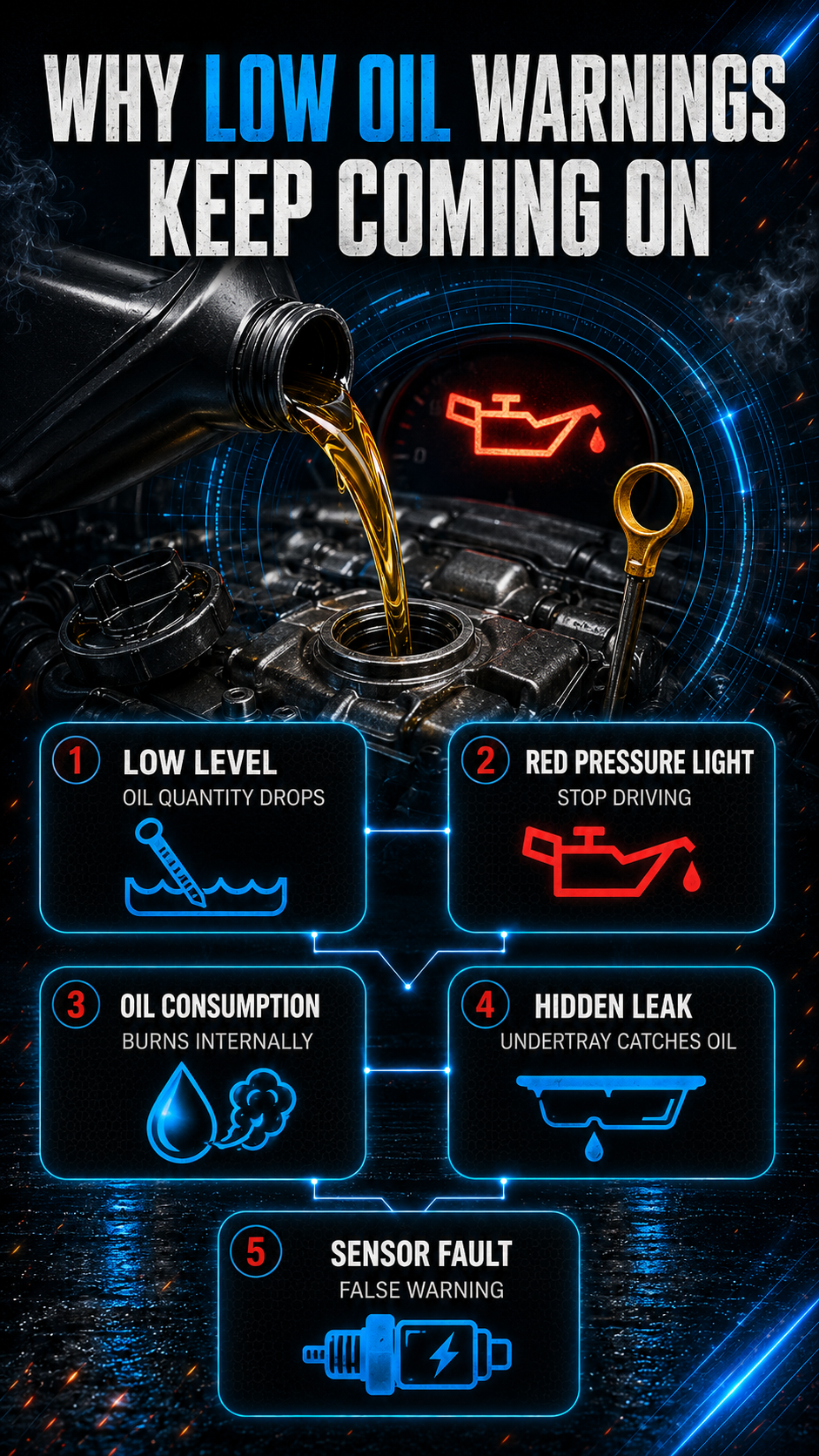
A low oil warning can return even when there is no puddle under the vehicle. The engine may be using oil internally, a leak may be collecting on an underbody panel, or the oil level sensor may be reporting an incorrect reading.
The first step is to identify whether the dashboard is showing a low oil level warning or a red oil pressure warning. These messages describe different conditions and require different responses.
What White Exhaust Smoke After Warm-Up Usually Means
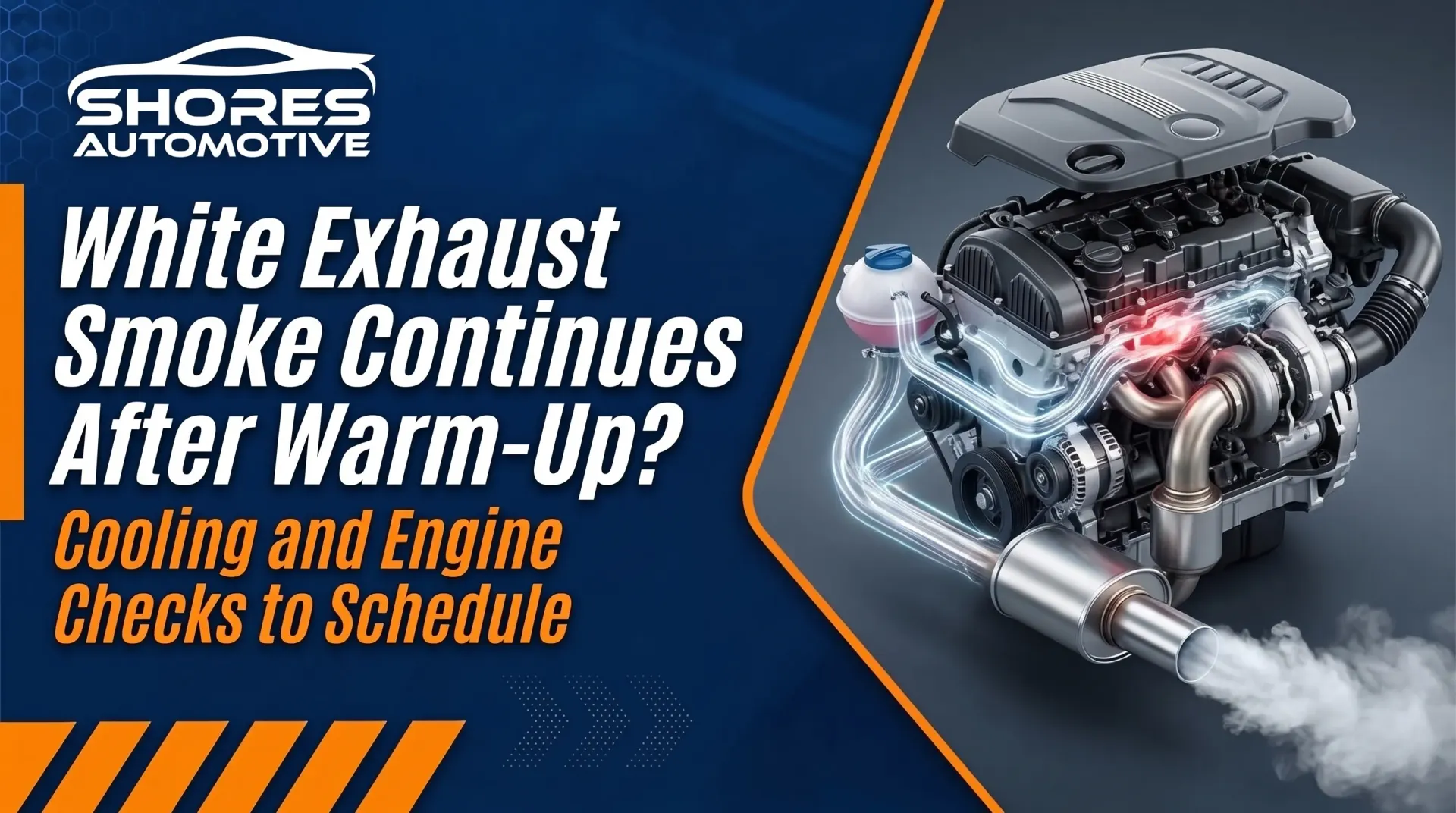
Persistent white exhaust usually means the engine is releasing vapor or smoke that does not belong in normal warm operation. The timing, thickness, smell, and related fluid loss help separate harmless condensation from a mechanical concern.
Normal Condensation Clears as the Exhaust Warms
Normal condensation is thin, fades quickly, and often leaves only a few drops of clear water at the tailpipe. Even in humid Boca Raton mornings, it should decrease as the exhaust reaches operating temperature. Vapor that continues after a full warm-up needs a closer look.
Coolant in the Combustion Chamber Creates Lasting Vapor
Coolant can enter a cylinder through a failed head gasket, cracked cylinder head, or another sealing problem. Some turbocharged or diesel engines have other paths for coolant or unburned fuel to reach the exhaust. Thick white smoke from the exhaust is a symptom, so testing must confirm the source.
Other Symptoms That Make White Smoke More Concerning
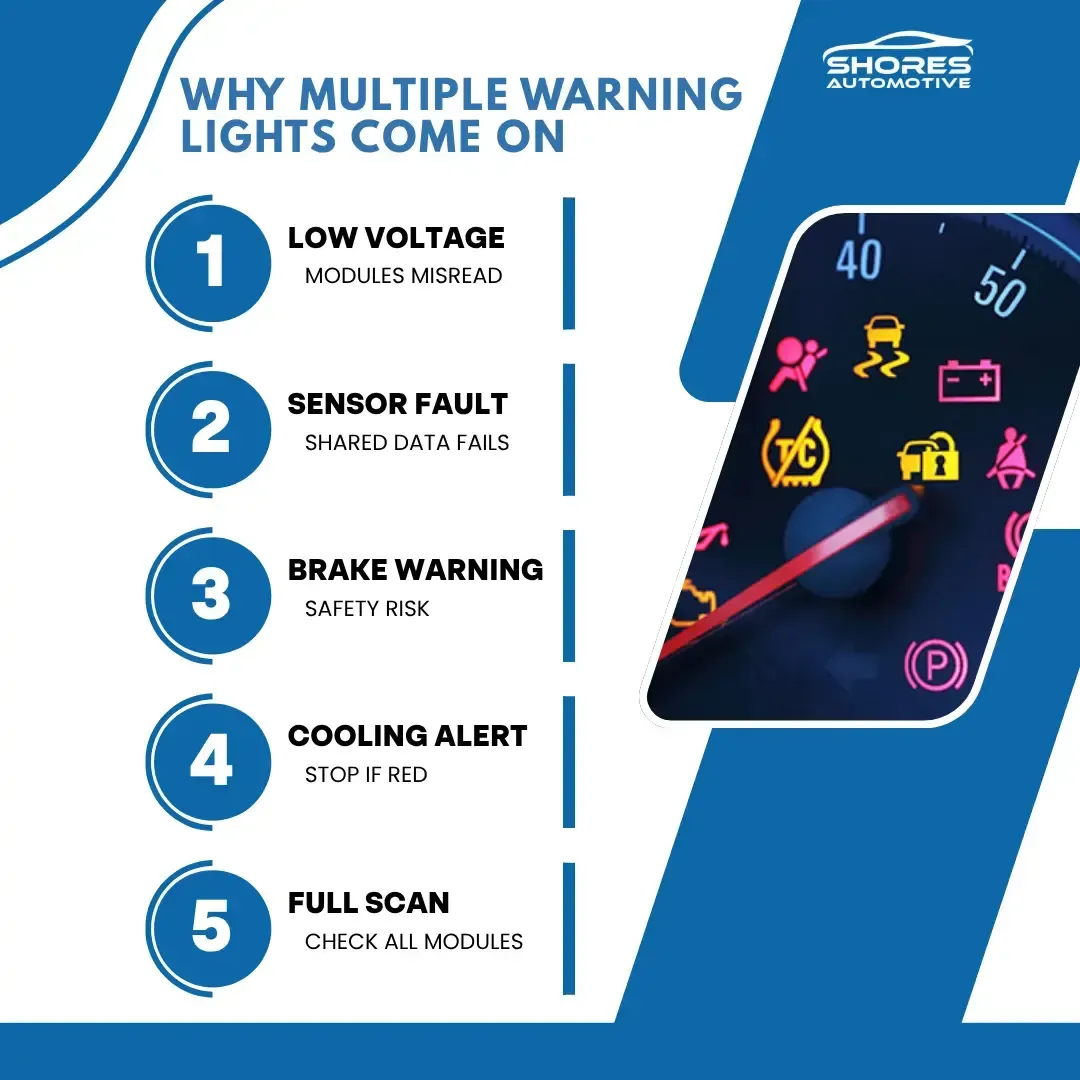
White smoke becomes more concerning when it appears with fluid loss, overheating, misfires, or warning lights. These added clues help a technician decide which tests should come first.
Falling Coolant, Sweet Odor, or Visible Residue
Common coolant leak symptoms include a falling reservoir level, sweet odor, colored residue, or dampness around a hose, tank, radiator, or water pump. An external leak may show that the system is losing pressure or fluid. Check the level only when the engine is cold.
Rough Running, Warning Lights, or Rising Temperature
A coolant-fouled cylinder may misfire, shake at idle, start poorly, or set a check engine light. The guide to what causes a European car to shake at idle explains why several tests may overlap. Stop driving if the temperature rises or power drops sharply.
Cooling and Engine Checks a Shop May Perform
A proper inspection tests the systems that could produce the symptom instead of assuming the engine needs major work. The exact plan depends on the vehicle, fault memory, fluid condition, and when the smoke appears.
Cooling-System Pressure and Leak Testing
A pressure test checks whether the cooling system holds its specified pressure and helps reveal external leaks. The technician may inspect the expansion tank, radiator, hoses, water pump, thermostat housing, and caps when applicable. A pressure drop without an obvious external leak can support further internal testing.
Combustion-Gas, Compression, and Leak-Down Testing
A combustion-gas test can check for exhaust gases in the cooling system. Compression and cylinder leak-down tests may show whether a cylinder has a sealing problem and where pressure is escaping. No single result should be read alone because engine design and symptom history affect what the numbers mean.
Scan Data, Spark Plugs, and Fluid Condition
An engine diagnostic service may review misfire counters, coolant temperature, fuel trims, and stored faults. Spark plugs, cylinder surfaces, oil, and coolant can add evidence. Shores Automotive uses brand-specific tools so the plan matches the engine.
Why Prompt Diagnosis Matters in Boca Raton
Prompt diagnosis matters because South Florida heat leaves less room for a weak cooling system. Stop-and-go traffic near Glades Road or on I-95 raises heat load while airflow is reduced. A small pressure loss may become more noticeable.
European engines use vehicle-specific cooling layouts and controls. The shop documents supported models and cooling concerns on its BMW service in Boca Raton, FL, page. Near A1A and the Intracoastal, coastal humidity can also affect connectors, so electronic checks may help.
What to Do Before Your Service Visit
Before the appointment, record whether the smoke appears at startup, idle, acceleration, or after a long drive. Note any coolant warning, sweet odor, rough running, recent cooling-system work, or change in the temperature gauge. Do not add stop-leak products unless a qualified technician recommends one for the confirmed problem.
If the temperature rises, a warning turns red, or the engine runs badly, pull over safely and shut it off. Florida Road Rangers may provide limited roadside assistance for drivers stranded on a covered freeway. Shores Automotive also offers European and exotic auto repair in Boca Raton, FL, for drivers who need further diagnosis or service.
Takeaways
White exhaust smoke after warm-up deserves testing when it remains thick, returns under load, or appears with coolant loss, rough running, or rising temperature. Normal condensation should fade as the exhaust warms, while persistent vapor can point to coolant or another combustion problem.
The right next step is a cooling-system and engine inspection that compares pressure, scan data, cylinder condition, and fluid evidence. Avoid opening a hot cooling system and stop driving if the vehicle overheats or loses power.
Frequently Asked Questions
Is white exhaust smoke normal on a cold start?
Yes, thin vapor can be normal on a cold or humid start. It should disappear as the exhaust warms. Thick smoke after warm-up needs inspection.
Can low coolant cause white exhaust smoke?
Low coolant alone does not create white smoke, but both symptoms can share the same internal leak. If coolant is entering a cylinder, the reservoir level may fall while white vapor leaves the tailpipe. Check the level only when the engine is cold.
Can I drive with white smoke coming from the exhaust?
You should not keep driving if the white smoke comes with overheating, coolant loss, a warning light, or rough running. Pull over safely and shut the engine off when those signs appear. A light cold-start vapor that clears fully is a different condition.
Does white smoke always mean a blown head gasket?
No, white smoke does not always mean a failed head gasket. Condensation, an engine-specific coolant path, or unburned fuel on some diesel vehicles can look similar. Testing must identify the source before repair decisions are made.
What tests confirm coolant is entering the engine?
Cooling-system pressure testing, combustion-gas testing, compression testing, and cylinder leak-down testing can provide useful evidence. A technician may also inspect spark plugs, scan data, oil, coolant, and cylinder surfaces. Results should be interpreted together.
Schedule Cooling and Engine Diagnostics at Shores Automotive
Persistent white smoke can involve the cooling system, the engine, or both. Contact Shores Automotive to schedule cooling system repair in Boca Raton and engine diagnostics in Boca Raton for your European or exotic vehicle.
Visit
2544 NW 2nd Ave, Boca Raton, FL 33431, or call
(561) 391-0260. Describe when the smoke appears so the team can plan the right
White exhaust smoke after warm-up is not normal when it stays thick or comes with coolant loss. Brief startup vapor can be harmless, but persistent smoke may mean coolant is reaching a cylinder.
Watch the temperature gauge and avoid driving if the engine begins to overheat. Do not remove a hot coolant cap. Note when the smoke appears and whether coolant levels are dropping.
If the smoke continues after warm-up, the cooling system and engine should be checked to identify the cause. Shores Automotive provides
cooling system repair in Boca Raton, FL, with testing to identify the cause before repairs are recommended.
A low oil warning can return even when there is no puddle under the vehicle. The engine may be using oil internally, a leak may be collecting on an underbody panel, or the oil level sensor may be reporting an incorrect reading.
The first step is to identify whether the dashboard is showing a low oil level warning or a red oil pressure warning. These messages describe different conditions and require different responses.
Get started today
Mon – Fri | 7:30am – 4:00pm
Sat – Sun | Closed