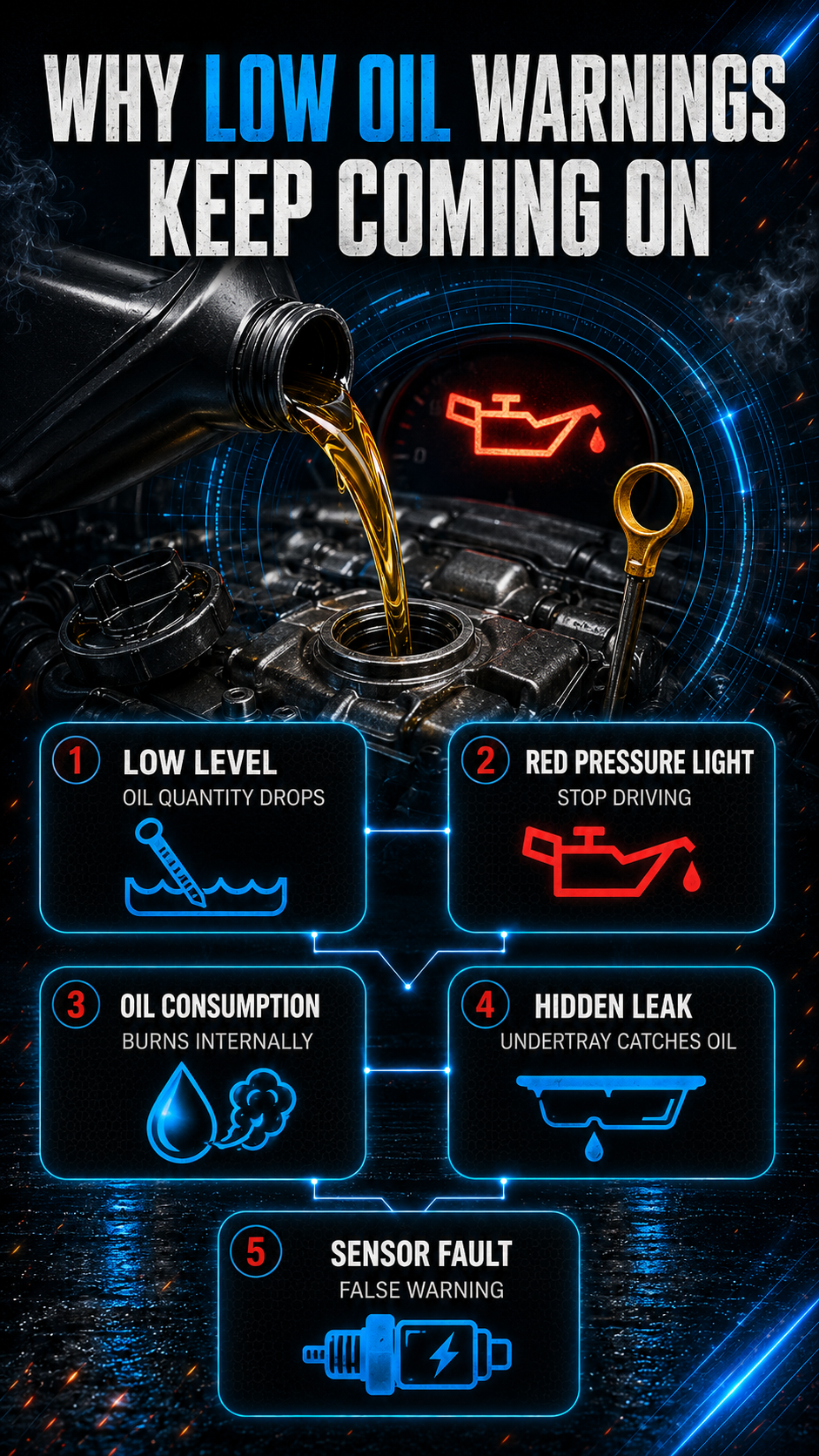
A low oil warning can return even when there is no puddle under the vehicle. The engine may be using oil internally, a leak may be collecting on an underbody panel, or the oil level sensor may be reporting an incorrect reading.
The first step is to identify whether the dashboard is showing a low oil level warning or a red oil pressure warning. These messages describe different conditions and require different responses.
The Wear Sensor May Not Have Been Replaced
Many European vehicles use a brake pad wear sensor with an electrical loop. When wear breaks that loop, the vehicle turns on a message. Many triggered sensors cannot be reused after new pads are installed.
A sensor can also look intact while its circuit is already open. The correct sensor must match the axle, connector, and brake package on the vehicle.
Sensor Wiring or a Connector May Be Open
A new sensor will not solve the warning if its harness is stretched, pinched, touching the rotor, or disconnected. Plug corrosion can also open the circuit. The technician should inspect the full route before replacing parts again.
The Correct Service Counter May Need a Reset
Some vehicles calculate pad life from sensor status, mileage, axle data, and a service counter. The reset may need the instrument menu, a scan tool, or both. Resetting the wrong axle can leave the brake warning light after pad replacement active.
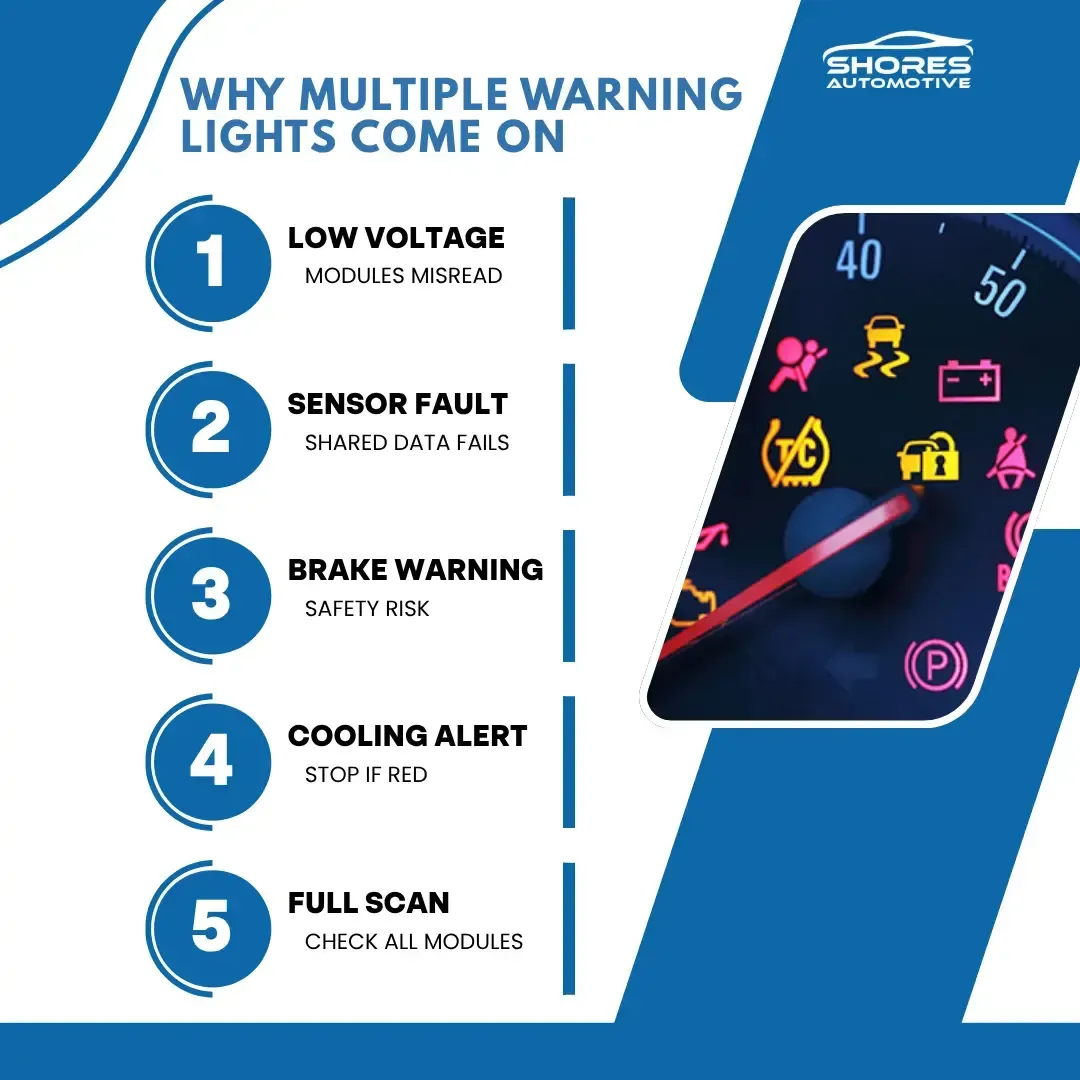
Identify Which Brake Warning Is Still Active
The exact message determines the next step. Take a photo of the warning and note whether it appears at startup, after driving, or only when the parking brake is used.
A Pad-Life Message Is a Maintenance Warning
A yellow or text-based pad-life message usually relates to wear, a sensor circuit, or calculated service life. It does not automatically mean hydraulic failure. Confirm pad thickness and the completed repair before resetting it.
Red Brake, ABS, and Stability Warnings Need Broader Checks
A red brake warning can relate to fluid level, hydraulic pressure, or the parking brake. ABS and stability lights point toward vehicle-control systems. A brake repair and safety inspection can combine measurements with brake-module data.
European Brake Diagnostic Checks to Schedule
The diagnostic process should verify the repair before clearing any message. This prevents a reset from hiding an installation, sensor, or wear concern that still needs correction.
Confirm the Pad and Rotor Work
The shop should confirm the serviced axle, measure inner and outer pads, and inspect the rotor and caliper. Another axle may be worn, while uneven wear may show a hardware problem. Service records can shorten this step.
Inspect the Sensor, Harness, and Connector
A visual check should follow the sensor from the pad to its connector. The circuit can then be tested for continuity where appropriate. Correct routing matters because a wire touching the wheel, rotor, or suspension can fail again after a short drive.
Read Faults and Reset the Correct System
Manufacturer-level diagnostics can identify stored brake, ABS, parking-brake, and service-counter faults. Shores Automotive uses brand-specific tools and verifies the warning after repair. The Mercedes-Benz service in Boca Raton, FL, page documents XENTRY support and AMG brake procedures.
Why Boca Raton Driving Conditions Matter
Stop-and-go traffic near Glades Road, I-95, and Federal Highway can shorten pad life. South Florida humidity and coastal air near A1A can affect connectors and hardware. These conditions give the technician useful context but do not replace testing.
Noise can provide another clue. The recent guide on why European brakes squeal explains how pads, sensors, rotors, moisture, and hardware can create different sounds. A warning without noise still requires the same careful identification.
What to Do Before the Appointment
Photograph the message, note the mileage, and bring the invoice from the pad service. Record which axle received pads, rotors, and sensors, if known. Do not keep resetting the reminder or disconnect the battery because stored information may help trace the fault.
Stop driving for a soft or sinking pedal, longer stopping distance, grinding, low fluid, or a red warning. Pull over safely and arrange assistance. Drivers stranded on a covered freeway can review Florida Road Rangers for limited help.
Takeaways
A brake pad warning that remains after replacement often points to a used or damaged sensor, an open wire, the wrong service counter, or incomplete repair information. The warning should not be cleared until pad thickness, sensor condition, and the correct axle are confirmed.
A pad-life message is not the same as a red brake, ABS, stability, or parking-brake warning. When the symbol is unclear or braking feels different, schedule a full brake inspection and electronic diagnosis.
Frequently Asked Questions
Will a brake pad warning reset itself?
Usually, a brake pad warning will not reset itself after the sensor circuit has opened. The vehicle may need a new sensor, a completed repair, and the correct reset procedure. The exact process depends on the model.
Do brake pad wear sensors need replacement with the pads?
Yes, many triggered wear sensors need replacement with the pads because the sensing loop has been worn through. An intact sensor may sometimes be reused if the manufacturer allows it. Its condition and circuit should be tested first.
Can I drive with the brake pad warning still on?
A short drive to a shop may be reasonable if braking feels normal and the message is only a pad-life reminder. Stop driving for a red warning, soft pedal, grinding, pulling, fluid loss, or longer stopping distance.
Why did the warning return after it was reset?
The warning returned because the system is still detecting an unresolved issue, such as an open sensor circuit, damaged wire, incorrect reset, or another brake fault. A scan and physical inspection should identify which condition remains.
Is a brake pad warning the same as an ABS light?
No, a brake pad warning tracks wear or service life, while an ABS light indicates a fault in the anti-lock braking system. The two warnings can appear together, but they require different tests and repair decisions.
Schedule European Brake Diagnostics at Shores Automotive
An active brake warning after new pads deserves a check of the repair, sensor circuit, and service data.
Contact Shores Automotive to schedule European brake diagnostics in Boca Raton for your European or exotic vehicle. Visit
2544 NW 2nd Ave, Boca Raton, FL 33431, or call
(561) 391-0260. Share the exact message and prior repair details when you book.
A brake pad warning still on after replacement usually means the wear-sensor circuit or service counter still needs attention. New pads alone may not clear the message on a European vehicle.
Shores Automotive provides brake pad replacement in Boca Raton, FL, with sensor inspection and reset checks when the vehicle requires them.
If the warning remains, it is important to identify the exact symbol. A pad-life reminder differs from a red brake, ABS, stability-control, or parking-brake warning. Those messages may change whether you should keep driving.
Why the Brake Pad Warning Stays On After Replacement
The warning usually remains because the car detects an open sensor circuit or unchanged service value. New friction material does not complete every electronic step.
A low oil warning can return even when there is no puddle under the vehicle. The engine may be using oil internally, a leak may be collecting on an underbody panel, or the oil level sensor may be reporting an incorrect reading.
The first step is to identify whether the dashboard is showing a low oil level warning or a red oil pressure warning. These messages describe different conditions and require different responses.
Get started today
Mon – Fri | 7:30am – 4:00pm
Sat – Sun | Closed