


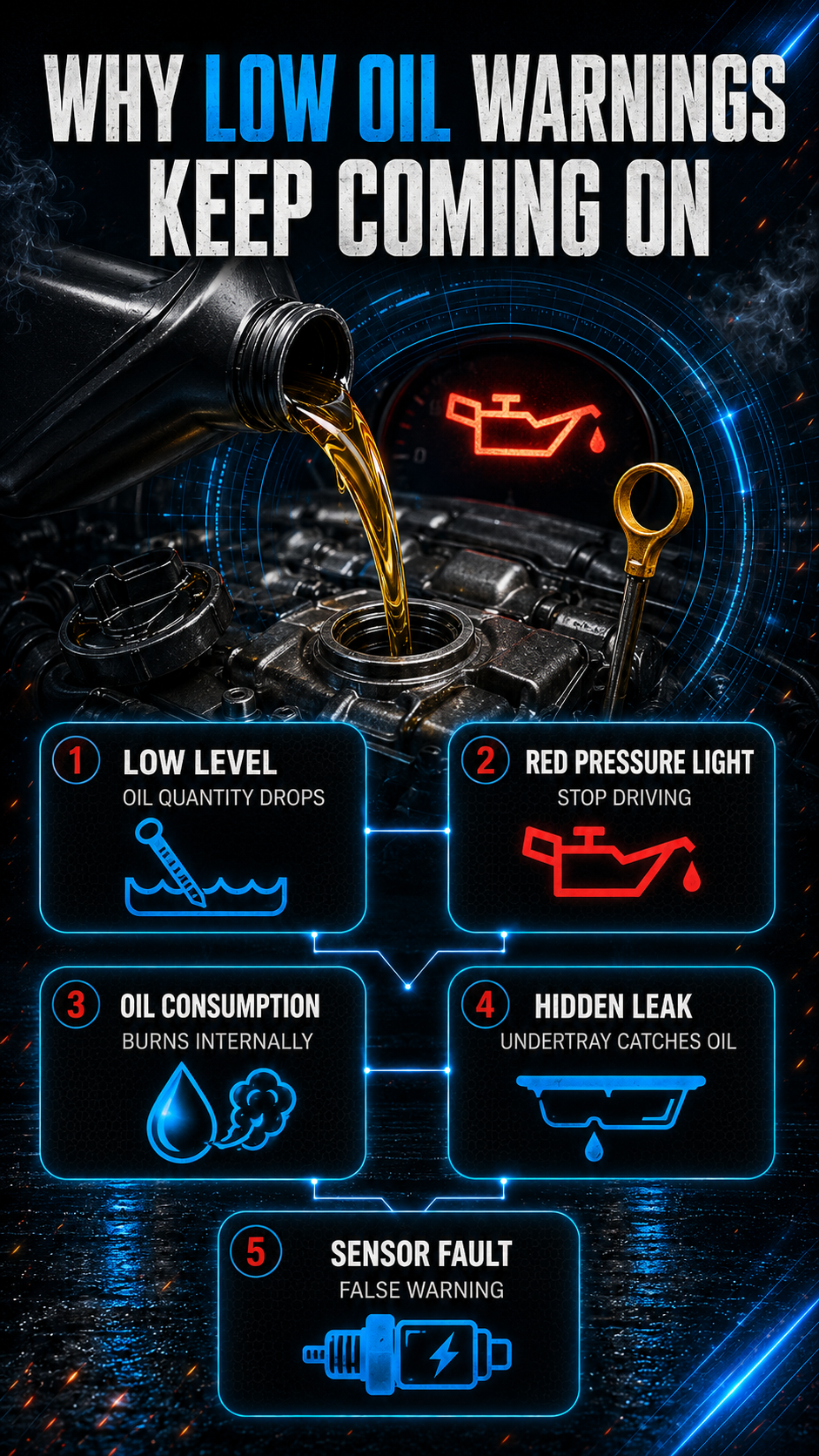
A low oil warning can return even when there is no puddle under the vehicle. The engine may be using oil internally, a leak may be collecting on an underbody panel, or the oil level sensor may be reporting an incorrect reading.
The first step is to identify whether the dashboard is showing a low oil level warning or a red oil pressure warning. These messages describe different conditions and require different responses.
Wheel Imbalance Becomes Stronger as Speed Rises
Wheel imbalance means weight is not distributed evenly around the wheel and tire assembly. At low speed, the force may be too small to notice. Near highway speed, it can create steering wheel vibration at highway speed, especially when a front assembly is involved.
Rear imbalance is often felt through the seat or floor. The location is not proof, but it provides a useful starting point.
No Brake-Pedal Shake Makes Brake Rotors Less Likely
A braking-only vibration often points toward brake rotors, hubs, or related movement. If the steering stays steady during braking but shakes while cruising, rotors become less likely. An inspection must still rule them out.
Other Causes of a Speed-Specific Steering Shake
Several faults can create the same speed pattern. The inspection should separate correctable imbalance from tire damage, wheel runout, and chassis looseness.
Tire Damage, Flat Spots, and Road-Force Variation
A tire can be weight-balanced yet roll unevenly because one area is stiffer. Seasonal storage may also leave flat spots. Belt movement, a bulge, or irregular wear needs a tire decision, not more weight.
Pressure loss can change how the tire carries load. The related guide on why a tire keeps losing air explains how punctures, valve stems, bead seals, and wheel damage can affect tire condition.
Bent Wheels, Missing Weights, and Uneven Wear
A pothole or curb impact can bend a wheel and create runout. A weight may also loosen after tire work. Cupped tread can point beyond balancing to worn dampers, bushings, or alignment concerns.
Suspension, Bearing, and Driveline Concerns
Loose tie rods, control-arm bushings, ball joints, or wheel bearings can allow movement that becomes obvious at speed. A vibration that changes under acceleration or while coasting may also involve the driveline. Suspension and steering repair may be part of the test plan when inspection finds play or uneven tire contact.
Wheel and Tire Checks to Schedule
The right service begins with measurement. Wheel balancing, tire inspection, and chassis checks should follow the speed and driving pattern you describe.
Tire and Wheel Inspection
The technician should check pressure, tread, sidewalls, tire age, weights, wheel damage, and debris inside the rim. Inspect tires before highway travel. If a tire is unsafe or worn out, new tire installation may be the correct next step.
Dynamic and Road-Force Wheel Balancing
Dynamic balancing measures two planes and places corrective weights on the wheel. Road force wheel balancing uses a loaded roller to measure tire and wheel behavior. It can reveal stiffness variation that a standard spin balance misses.
Runout, Suspension, and Road-Test Confirmation
Runout measurements show whether a wheel or tire moves out of round or side to side. The shop may inspect bearings, steering parts, bushings, shocks, and struts. A road test can confirm the result.
Why Boca Raton Driving Conditions Matter
Boca Raton drivers often notice the shake at steady speeds on I-95 or Florida’s Turnpike. Heat, long parking, road repairs, and impacts near Glades Road or Federal Highway can expose tire and wheel concerns. Do not speed to reproduce it.
Staggered fitments may need closer measurement because front and rear sizes differ. Shores Automotive confirms supported models on its Porsche service in Boca Raton, FL, page. Run-flat and low-profile fitments on other European vehicles may need similar care.
What to Note Before the Appointment
Record the speed where the shake begins and whether you feel it in the wheel, seat, or floor. Note changes during acceleration, coasting, braking, turns, or warm-up. Mention recent tire work, impacts, warnings, or storage.
If the car shakes at high speed and the vibration becomes severe, reduce speed smoothly and exit traffic safely. Stop for visible tire damage, sharp pulling, or a warning. Drivers stranded on a covered freeway can review Florida Road Rangers for limited assistance.
Takeaways
A speed-specific steering shake without braking vibration often points first toward wheel imbalance, tire variation, or wheel damage. It does not automatically mean the brake rotors or alignment are responsible.
A useful inspection checks the full wheel and tire assembly, measures balance and road force when appropriate, and rules out unsafe tire or suspension conditions. Record the speed and driving conditions before your visit so the test plan starts with the right clues.
Frequently Asked Questions
Why does my steering wheel shake only at highway speed?
A rotating wheel or tire fault may create too little force to feel at low speed but become noticeable on the highway. Imbalance, tire stiffness, a bent wheel, or wear can all create this pattern. Testing should identify which condition is present.
Can a wheel be out of balance without shaking at low speed?
Yes, a wheel can be out of balance without a clear low-speed symptom. The imbalance force rises with speed, so the steering may feel normal around town and begin shaking near 60 mph.
Does a shake while braking mean the same problem?
No, a shake that appears mainly while braking often points toward brake rotors, hubs, or braking-system movement. A cruising vibration is more likely to start with wheel and tire checks. Both symptoms can exist at the same time.
Can an alignment fix a high-speed steering shake?
Alignment usually corrects wheel angles that cause pulling, an off-center steering wheel, or uneven tire wear. It does not directly correct wheel imbalance. An alignment may still be needed if the inspection finds angle or suspension concerns.
Is it safe to drive with a steering wheel vibration?
A mild, unchanged vibration may allow a careful drive to a shop, but the cause is still unknown. Reduce speed and stop if the vibration becomes severe, a tire is damaged, the vehicle pulls, or a warning light appears.
Schedule Wheel Balancing at Shores Automotive
A highway-speed steering shake should be measured before tires or suspension parts are replaced. Contact Shores Automotive to schedule wheel balancing in Boca Raton and a wheel, tire, and suspension inspection for your European or exotic vehicle. Visit
2544 NW 2nd Ave, Boca Raton, FL 33431, or call
(561) 391-0260. Share the speed range and braking pattern when you book.
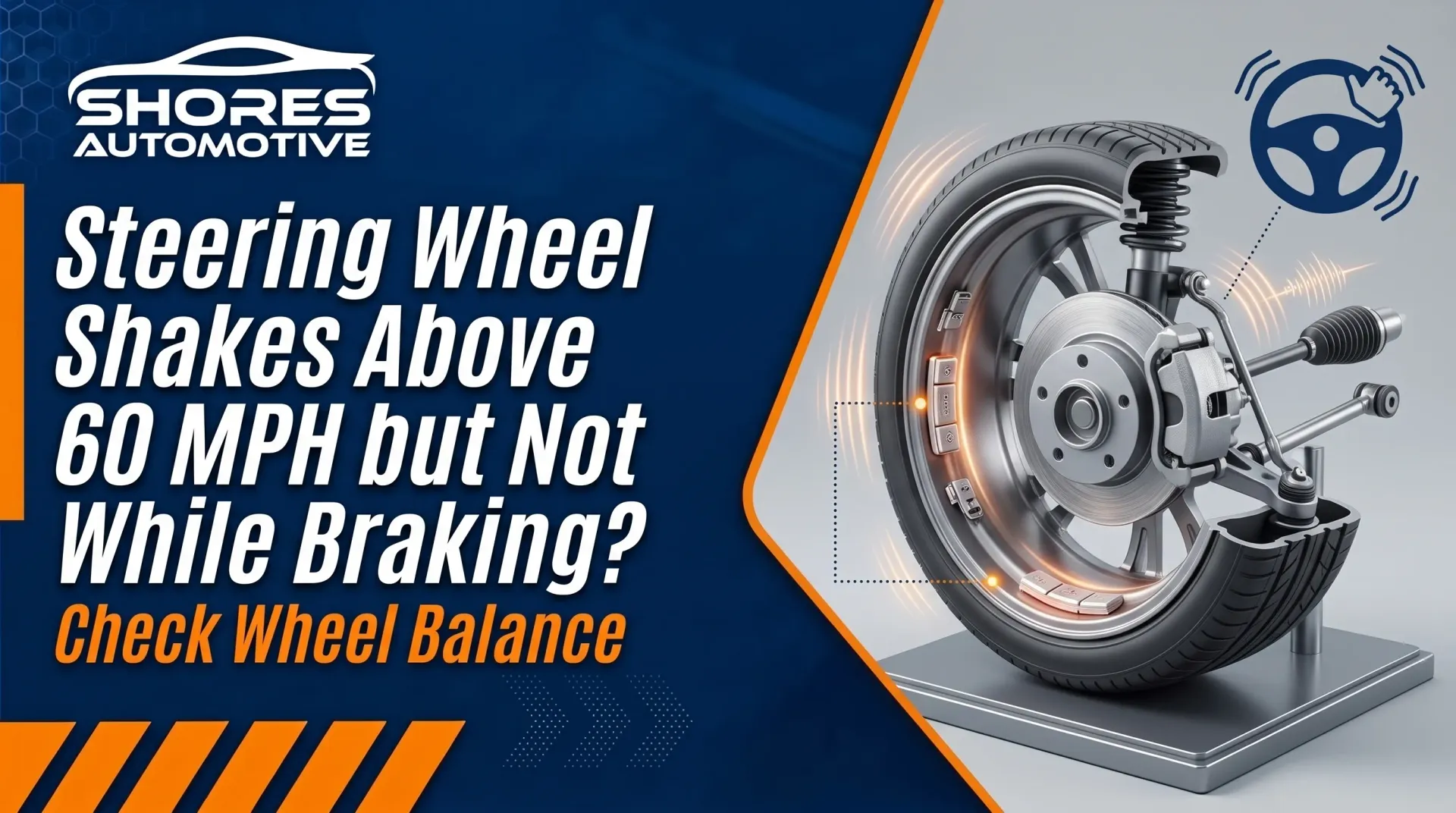
When your steering wheel shakes above 60 mph but stays calm during braking, the pattern often points first to the wheels or tires. Imbalance, tire stiffness, a bent wheel, or uneven wear can create a speed-sensitive vibration.
Shores Automotive provides wheel balancing in Boca Raton, FL, using Hunter equipment for European and exotic vehicles.
Balancing is not the only possible repair. A complete check should confirm tire condition, wheel shape, road force, and suspension movement first.
Why the Steering Wheel Shakes Above 60 MPH
A shake within a narrow speed range often comes from a rotating wheel, tire, or related part. The force becomes easier to feel as speed rises.
A low oil warning can return even when there is no puddle under the vehicle. The engine may be using oil internally, a leak may be collecting on an underbody panel, or the oil level sensor may be reporting an incorrect reading.
The first step is to identify whether the dashboard is showing a low oil level warning or a red oil pressure warning. These messages describe different conditions and require different responses.
Share us on:

Hi, I'm Billy Craven, owner of Shores Automotive in Boca Raton, Florida, with 44 years in the automotive service industry. My career started sweeping floors at my father's tire and service center and moved through counter sales, store management, and multi-shop ownership. Since 2012, my wife Cindy and I have grown Shores Automotive into a European auto repair shop our children have helped build alongside us.
My focus has always been the business side of the trade — customer service, service writing, operations, and financial management — backed by hundreds of hours of training and coaching through Goodyear, the Automotive Training Institute (ATI), Shop Fix, and The Institute. That same standard carries into the shop, where our team performs engine diagnostics and repair using a factory Porsche scanner and brand-specific software.
At Shores Automotive, we specialize in Porsche and BMW service along with other European makes, handling transmission and drivetrain work, suspension, and cooling on a correct-first-time diagnostic standard. Drivers across Boca Raton and Palm Beach County rely on us for dealer-level work with the convenience of a local specialist.


