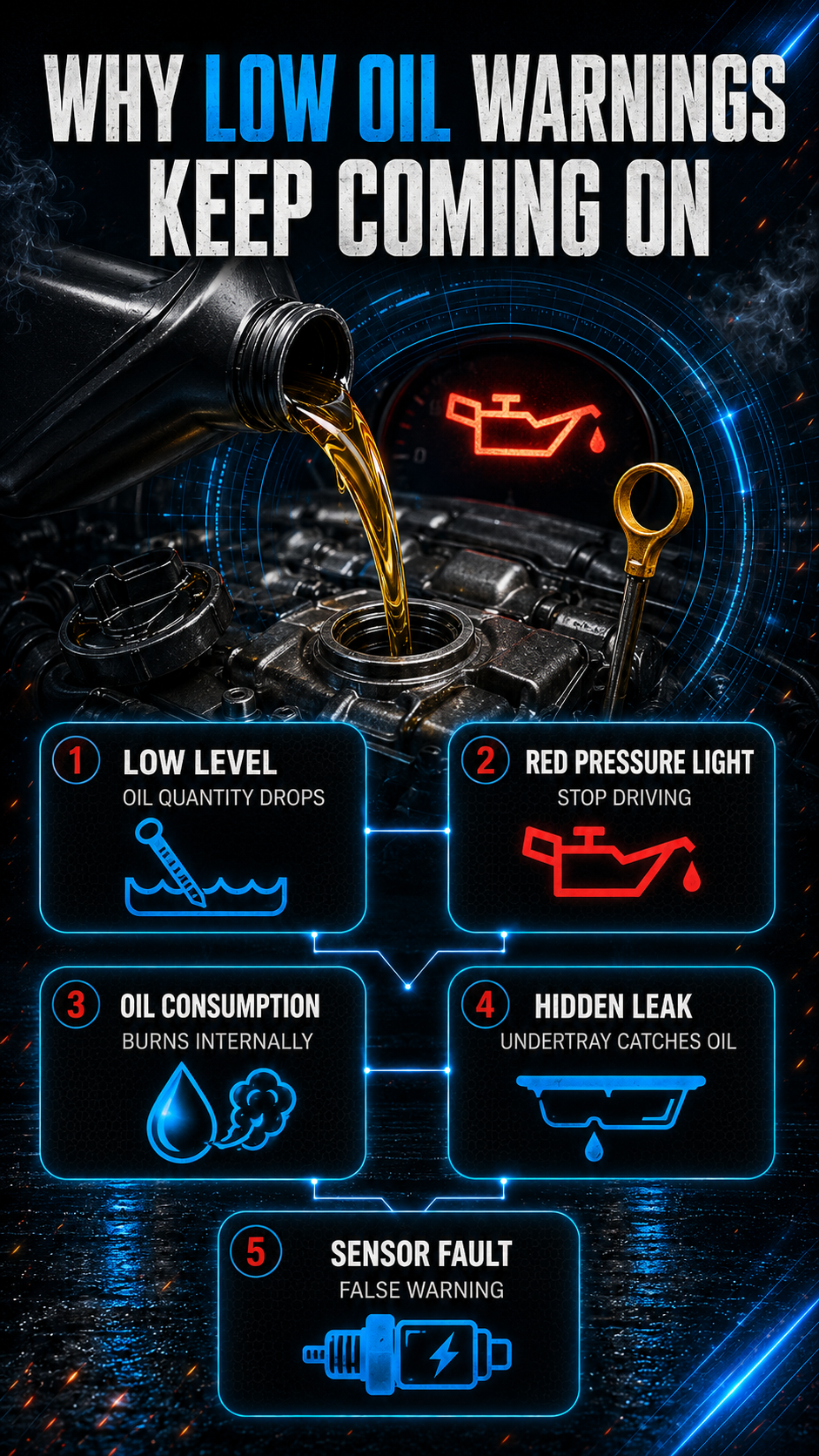
A low oil warning can return even when there is no puddle under the vehicle. The engine may be using oil internally, a leak may be collecting on an underbody panel, or the oil level sensor may be reporting an incorrect reading.
The first step is to identify whether the dashboard is showing a low oil level warning or a red oil pressure warning. These messages describe different conditions and require different responses.
A Small Puncture Can Hide in the Tread
A nail, screw, glass shard, or road debris from I-95, Glades Road, or Palmetto Park Road can create a small tread puncture that leaks slowly. The tire may look fine in your driveway, then lose a few pounds of pressure by the next morning.
A slow tire leak often shows up as repeated low-pressure warnings, uneven tire wear, or a tire that looks slightly lower after sitting overnight. If the puncture is in a safe repair zone, repair may be possible. If it is too close to the edge, replacement is usually the safer call.
Valve Stems, Bead Seals, and Wheel Edges Matter
The leak is not always in the tread. Valve stems can crack from age, heat, or UV exposure. The bead area where the tire seals against the wheel can leak if corrosion, dirt, or damage prevents a tight seal.
Boca’s heat, humidity, summer storms, and coastal air near A1A can make small sealing issues more noticeable. That is especially true if the vehicle sits for days, then gets driven at highway speed.
A Damaged Tire May Not Be Repairable
A tire loses air repeatedly when the structure can no longer hold pressure safely. Sidewall bubbles, cuts, exposed cords, shoulder damage, or internal belt issues all change the repair decision. Adding air may get you home, but it does not make a compromised tire safe.
When Repair Makes Sense and When Replacement Is Safer
A repair may be appropriate when the damage is limited and located in a repairable area. On the other hand, replacement is safer when the damage is severe, affects the sidewall, or the tire is too worn or aged. The decision also depends on the tire type and the vehicle’s requirements.
Repair and replacement are not interchangeable, so the tire should be inspected before choosing the safest option.
Repairable Punctures Are Usually Limited
Many tread punctures can be repaired if they are small, clean, and located away from the shoulder or sidewall. The tire also needs enough tread life left to justify the repair.
A proper repair should seal the injury path and restore the tire’s ability to hold air. Simply plugging a leak without checking the inside of the tire can miss hidden damage.
Sidewall and Shoulder Damage Changes the Answer
Sidewall and shoulder areas flex heavily. A puncture there usually cannot be safely repaired because the tire needs full strength under cornering, braking, and heat.
That becomes even more important for luxury SUVs, performance sedans, and exotic vehicles. A heavy Range Rover, a fast Porsche, or a BMW M model places more demand on tire structure than a basic commuter car.
Run-Flat and Performance Tires Need Extra Care
Run-flat tires can be helpful after pressure loss, but they also need careful inspection. Driving too long with low pressure can damage the internal structure even if the outside looks normal.
For drivers comparing Boca Raton tire replacement options, fitment should guide the decision. Tire size, load rating, speed rating, tread pattern, and run-flat design all affect how the vehicle feels.
Why European and Exotic Tires Need a More Exact Decision
Tire choice can directly affect how a European or exotic vehicle handles, brakes, grips the road, and rides. The wrong tire may fit the wheel but still change steering feel, wet grip, braking confidence, or ride comfort.
Fitment Affects Handling, Braking, and Ride Feel
Drivers often start looking into European tire service in Boca Raton after the car feels different. Maybe the steering is no longer centered, the ride feels harsh, or the car tracks oddly after new tires.
For BMW, Mercedes-Benz, Porsche, Audi, Land Rover, Jaguar, Maserati, Bentley, Rolls-Royce, Aston Martin, Alfa Romeo, and MINI owners, tire selection should match the vehicle’s engineering. That may include staggered fitments, run-flat construction, performance ratings, or SUV load requirements.
If the tire is no longer safe to repair, Shores Automotive can help with new tire installation using the right fitment for the car.
Alignment and Balancing Can Reveal the Real Issue
A tire problem may be part of a bigger wheel or suspension concern. If the steering wheel is off-center, the car pulls, or tread wear is uneven, wheel alignment should be checked before another tire wears out early.
A vibration that appears around highway speed may point toward wheel balancing, tire damage, bent wheel concerns, or road-force variation.
Local Driving Conditions That Can Make Air Loss Worse
Heat, rain, coastal air, traffic, and seasonal vehicle use can make small tire leaks or pressure problems more noticeable. Boca Raton driving conditions can expose these issues sooner, especially when a tire already has a weak seal, valve problem, or slow leak.
Heat, Rain, and Coastal Air Can Expose Weak Spots
South Florida heat can shift tire pressure, especially during seasonal changes or after long drives. Summer storms can leave more road debris near curbs and drainage areas. Coastal moisture can also affect valve stems, wheel hardware, and bead sealing over time.
Drivers running between central Boca, Delray Beach, Lighthouse Point, and Deerfield Beach often mix short trips with I-95 mileage. That combination can make tire wear and pressure changes easier to notice.
Seasonal Storage Can Leave Tires Underinflated
Snowbird season adds another layer. A car that sits for weeks or months may develop low pressure, flat-spotting, or tire aging concerns before it returns to regular use. Before heading north or putting miles on I-95, the tires should be checked for age, tread condition, pressure, and visible cracking.
What Shores Automotive Checks Before Recommending a Tire
The tire, wheel, pressure system, and related suspension components are checked before repair or replacement is recommended. This helps Shores Automotive base the tire decision on the actual condition of the vehicle rather than an assumption.
Tire Condition, Pressure, and TPMS Readings
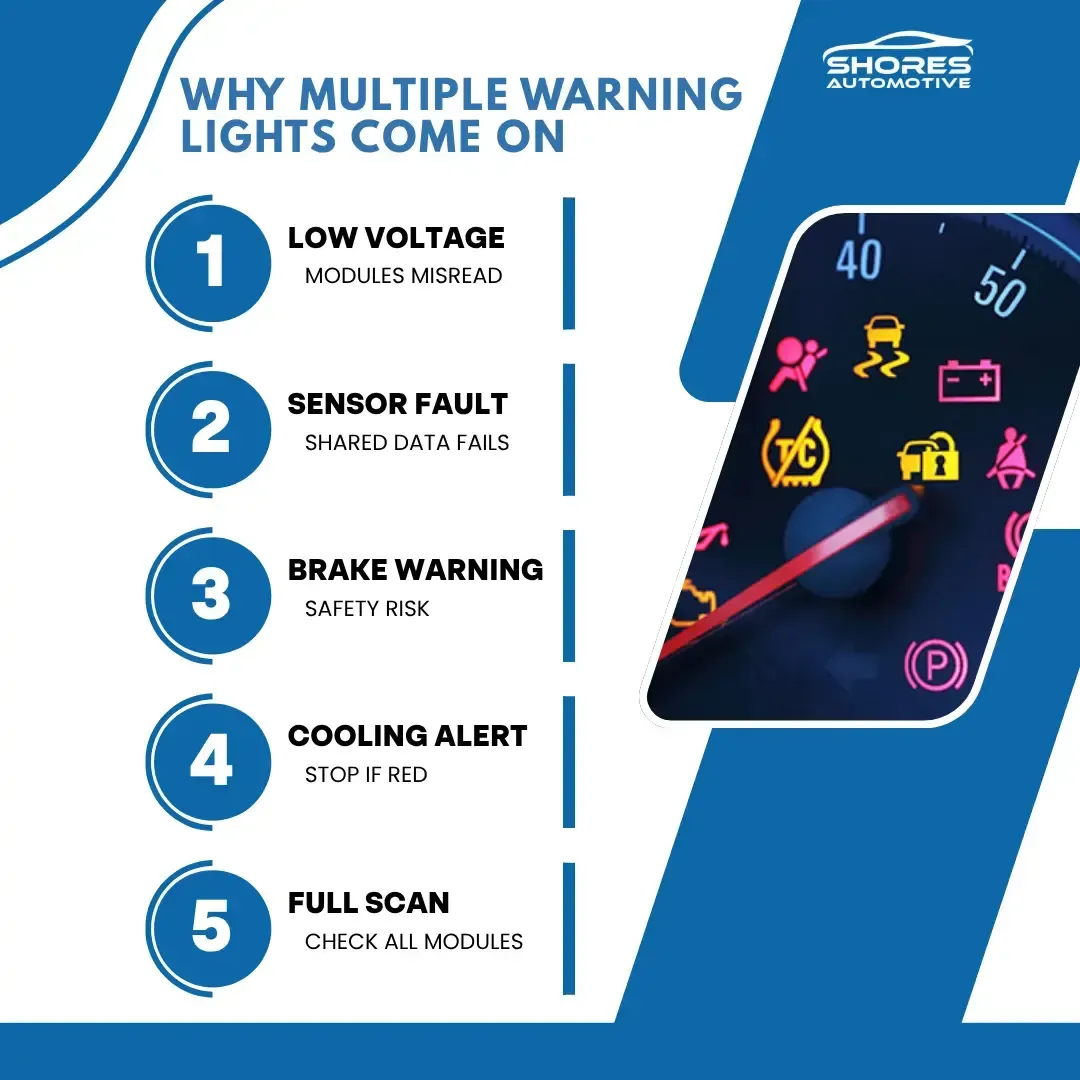
The inspection should confirm tread depth, age, puncture location, air pressure, sidewall condition, and TPMS behavior. If the warning light keeps returning after inflation, the issue may be a leak, sensor concern, valve stem issue, or pressure change caused by temperature.
Wheel Balance, Alignment, and Suspension Clues
Uneven tire wear can come from alignment, worn bushings, bent wheels, or suspension movement. If tire wear is paired with clunks, drifting, steering pull, or vibration, suspension and steering repair may need to be part of the conversation.
For broader maintenance context, Shores Automotive also offers a helpful guide to general auto repair basics for Boca drivers.
Service History and Driving Habits
The right next step can change based on how the vehicle is used. A performance coupe, luxury SUV, seasonal Boca car, and daily commuter may need different tire choices. Shores Automotive can help match the tire decision to the car, the mileage, and the way you actually drive.
Takeaways
A tire that loses air repeatedly should not be ignored. The cause may be a simple tread puncture. However, air loss can also come from a valve stem, bead seal, wheel issue, tire age, or structural damage that changes the repair decision.
For Boca Raton drivers, local heat, rain, coastal moisture, I-95 driving, and seasonal storage can all make tire problems show up faster. A careful inspection helps you decide whether repair is reasonable or replacement is the safer long-term choice.
FAQs About Tires Losing Air
Why does my tire keep losing air even after I fill it?
A tire may keep losing air because of a small puncture, leaking valve stem, bead seal issue, cracked wheel, or tire damage. Temperature changes can affect pressure too, but repeated loss usually means the tire should be inspected.
Can a slow tire leak be repaired?
A slow tire leak can often be repaired if the puncture is small and located in the main tread area. If the damage is on the sidewall, shoulder, or internal structure, replacement is usually the safer option.
Is it safe to drive with a tire pressure light on?
You should check the pressure as soon as the light appears. Driving on a low tire can increase heat, reduce handling performance, damage the tire, and make the vehicle less predictable during braking or in rain.
Why do Boca Raton drivers see tire pressure changes?
Heat, temperature changes, heavy rain, coastal conditions, and extended periods of sitting can affect tire pressure or make existing leaks more noticeable. Seasonal vehicles may also lose pressure while sitting before returning to regular use.
Do European vehicles need special tires?
Many European and exotic vehicles need specific tire sizes, load ratings, speed ratings, run-flat designs, or performance fitments. The wrong tire can affect ride quality, steering feel, braking, and system behavior.
Get Clear Tire Repair and Replacement Guidance from Shores Automotive
If your tire keeps losing air, the safest next step is a proper inspection. Shores Automotive can check the leak source, tire condition, wheel balance, alignment clues, TPMS behavior, and replacement options before you make the call.
Schedule tire repair in Boca Raton with Shores Automotive at
2544 NW 2nd Ave, Boca Raton, FL 33431. Call
(561) 391-0260 to plan your visit and get clear guidance from a shop that understands European and exotic vehicles.
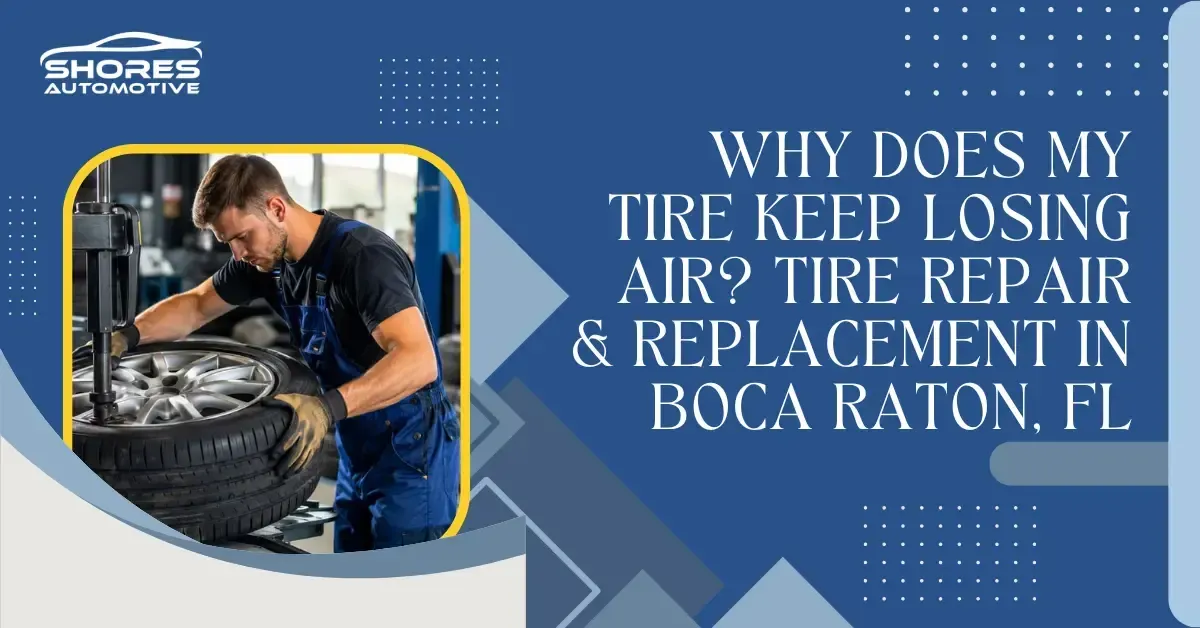
A tire that keeps losing air usually has a leak, sealing issue, valve problem, or damage that allows pressure to escape. If you need tire repair in Boca Raton, the right first step is finding out why the pressure is dropping. Simply refilling it and hoping the light stays off does not address the cause.
At Shores Automotive, tire concerns are checked with the same care we bring to European and exotic vehicles every day. Whether it is a BMW with run-flats, a Porsche with staggered tires, a Range Rover SUV, or a Mercedes daily driver, the correct tire choice matters. It should never come down to a rushed guess.
Why Tire Repair in Boca Raton Starts with Finding the Leak
Identifying the exact source of air loss shows whether the tire can be safely repaired or if another solution is needed. Air loss can come from the tread, sidewall, valve stem, wheel, sensor, or the way the tire is seated.
A proper tire inspection checks each of these areas before any repair is recommended. This helps avoid guessing and ensures the repair matches the actual cause of the pressure loss.
A low oil warning can return even when there is no puddle under the vehicle. The engine may be using oil internally, a leak may be collecting on an underbody panel, or the oil level sensor may be reporting an incorrect reading.
The first step is to identify whether the dashboard is showing a low oil level warning or a red oil pressure warning. These messages describe different conditions and require different responses.
Get started today
Mon – Fri | 7:30am – 4:00pm
Sat – Sun | Closed