


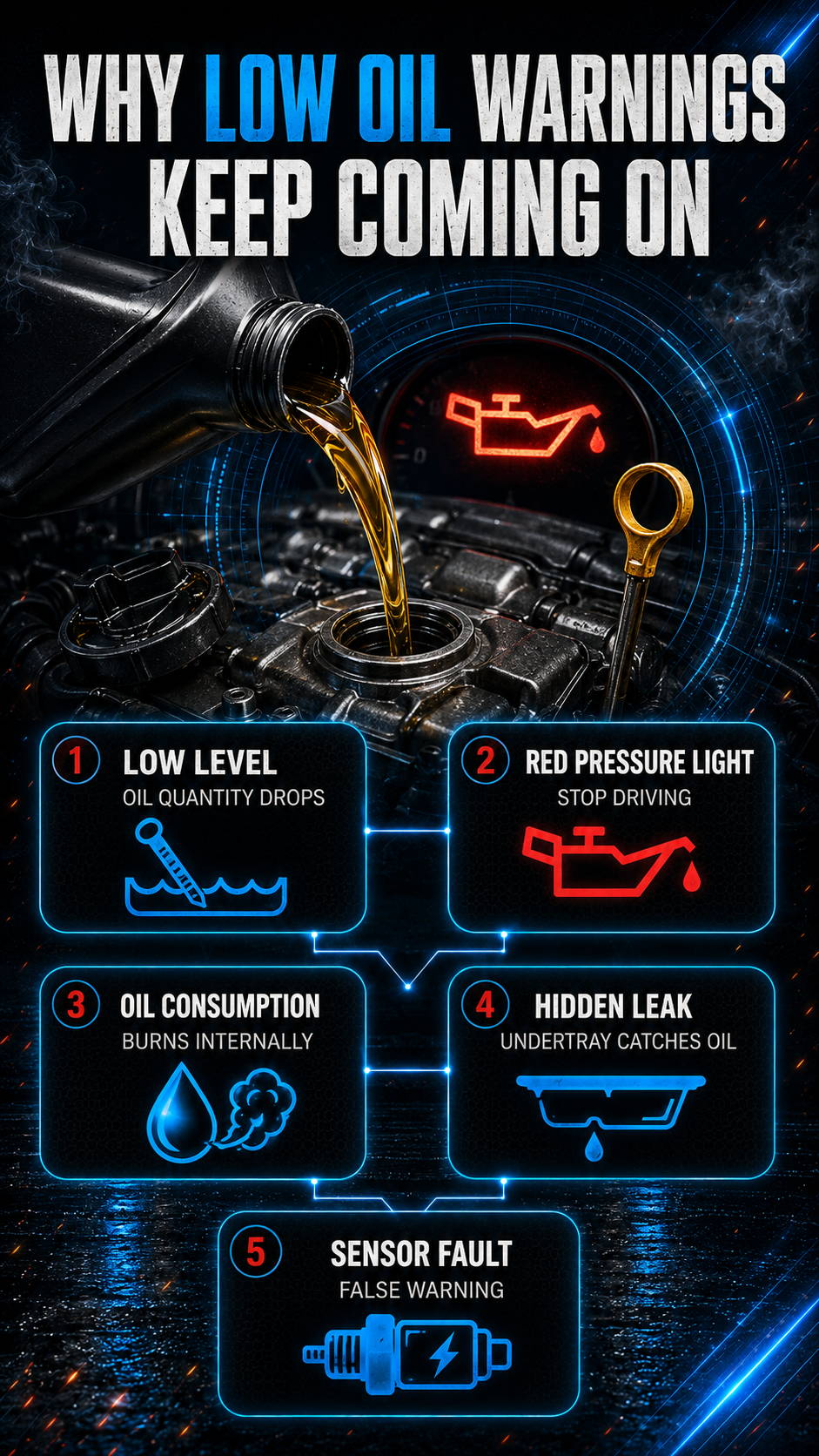
A low oil warning can return even when there is no puddle under the vehicle. The engine may be using oil internally, a leak may be collecting on an underbody panel, or the oil level sensor may be reporting an incorrect reading.
The first step is to identify whether the dashboard is showing a low oil level warning or a red oil pressure warning. These messages describe different conditions and require different responses.
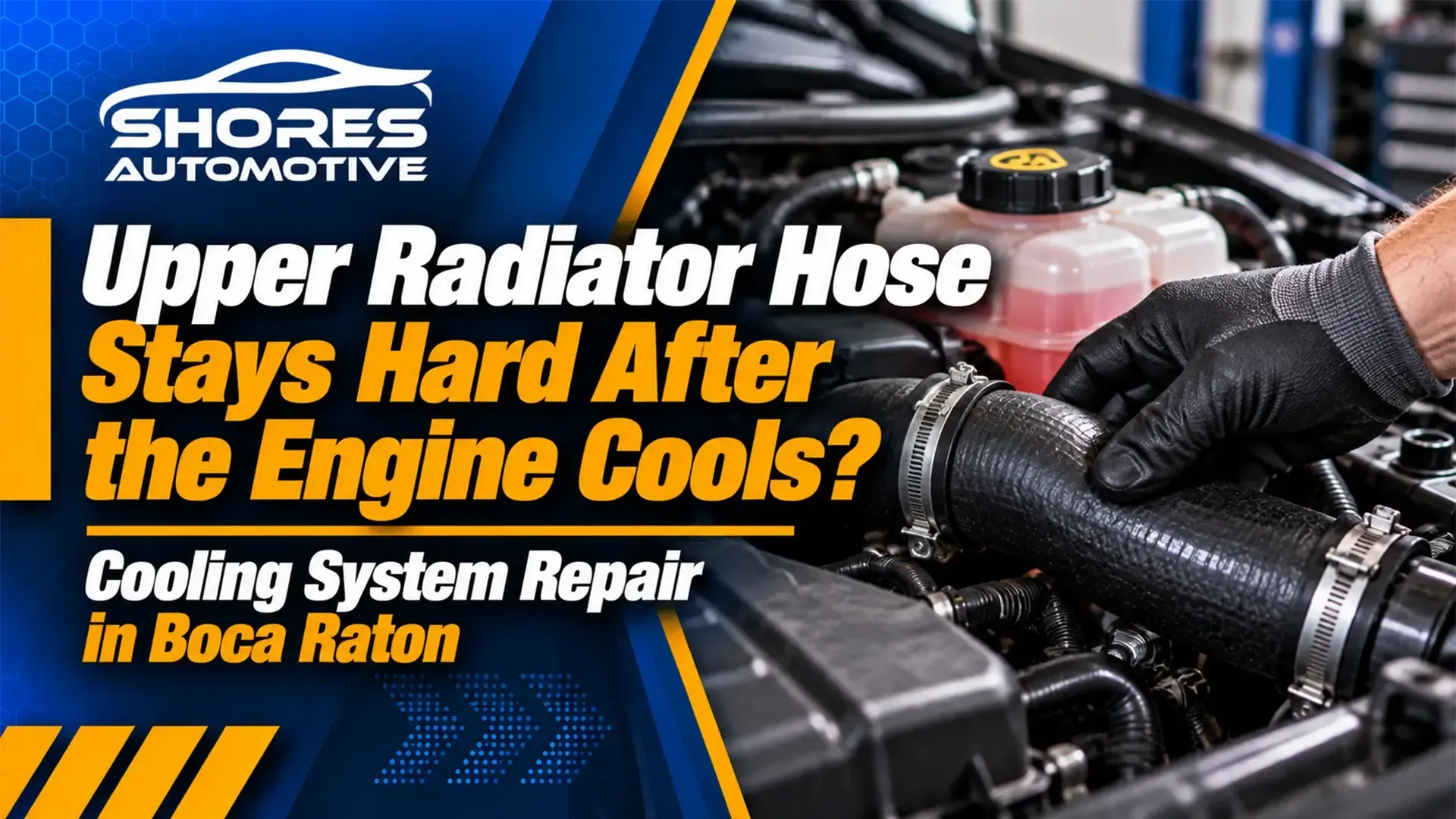
Is a Firm Upper Radiator Hose Normal After Shutdown?
A firm hose soon after shutdown can be normal because hot coolant expands. The useful comparison is how it feels after the engine is fully cold.
Warm Systems Can Hold Pressure for Hours
European systems may stay warm for hours. Compact engine bays and South Florida weather extend heat soak after Glades Road or I-95 traffic.
Hose Age Can Feel Like Internal Pressure
An old hose can become stiff or damaged without unusual pressure. A hard radiator hose when cold may reflect hardened rubber. Cracks, bulges, soft spots, or seepage require inspection.
What Can Cause Pressure to Remain After Cool-Down?
Retained cooling system pressure can involve a faulty cap, restricted return path, or gas entering the coolant. Squeezing the hose cannot confirm the cause.
A Faulty Pressure Cap or Vacuum Valve
The cap controls pressure as coolant heats and permits return flow as it cools. A damaged seal, wrong cap, or sticking valve can disrupt that cycle, so the cap and sealing surface need testing.
A Restricted Return or Bleed Path
A kinked hose, restricted bleed line, blocked tank passage, or trapped air can interfere with pressure equalization. Our radiator repair and replacement process checks hoses, fittings, the expansion tank, thermostat housing, water pump area, and radiator before selecting a repair.
Combustion Gas Entering the Cooling System
A sealing fault can push combustion gas into the coolant. Quick pressure buildup from a cold start, continued bubbles, expelled coolant, or repeated overheating calls for targeted testing, but no single sign proves engine damage.
Warning Signs That Change the Diagnosis
Rapid pressure buildup, overheating, coolant loss, steam, or warning messages make the symptom urgent. Stop driving if the temperature rises above normal.
Pressure Builds Quickly From a Cold Start
A hose that becomes very hard within minutes of a completely cold start needs evaluation. Comparing coolant temperature, pressure, and circulation as the engine warms provides stronger evidence than firmness after a hot drive.
Coolant Loss, Bubbles, Steam, or Overheating
Coolant loss, a sweet odor, dried residue, continued bubbling, or steam may point to a leak or abnormal pressure. BMW hose, expansion-tank, water-pump, and thermostat concerns are evaluated through our platform-specific BMW cooling system service.
If the engine overheats or releases coolant on I-95, move out of traffic when it is safe, shut the engine off, and arrange assistance. Florida Road Ranger highway assistance provides limited help to motorists on covered highways.
How We Test a Hard Upper Radiator Hose
A proper diagnosis checks the system cold and at operating temperature. At Shores Automotive, we review the timeline, coolant level, visible condition, and recent work.
Inspect the Hose, Cap, Tank, and Connections
We inspect the hose for hardening, swelling, collapse, rubbing, and seepage. We also check the cap, neck, tank, bleed lines, clamps, and fittings.
Pressure-Test the System and Cap
A cooling system pressure test checks whether the system holds its specified pressure and reveals external leaks. The cap is tested separately for release and sealing behavior using the vehicle's rating.
Check Temperature Data, Flow, and Combustion Gas
Scan data can show coolant temperature, fan commands, thermostat behavior, and stored faults. If the pressure pattern suggests an internal leak, a chemical combustion-gas test or cylinder leak-down test may confirm it. Results direct the repair.
Shared airflow can connect cooling and climate symptoms. Our guide to A/C that is cold while driving but warm at idle explains how radiator fans affect both systems in traffic.
What Boca Raton Drivers Should Do Next
Let the vehicle become fully cold, then note whether the hose is merely stiff or clearly pressurized. Record warnings, gauge changes, leaks, odors, bubbles, and recent repairs. Do not keep adding coolant without finding the loss.
Federal Highway, Glades Road, and I-95 traffic add heat load. Schedule testing before another long drive if pressure remains after a cold soak or a warning sign appears.
Takeaways
Firmness after shutdown may reflect normal heat and pressure. Pressure that remains at ambient temperature needs inspection, especially with coolant loss, bubbling, rapid cold-start pressure, or overheating.
A cooling system pressure test separates hose stiffness from a cap, leak, return-path, or engine concern. Never open the cap hot, and stop if the temperature rises or coolant escapes.
Frequently Asked Questions
How long can a radiator hose stay firm after shutdown?
A radiator hose can stay firm for several hours while the engine and coolant remain warm. Check it only after the vehicle has fully cooled to ambient temperature because cool-down time varies with weather, engine design, and recent driving.
Can a bad radiator cap keep the upper hose hard?
Yes, an incorrect or faulty cap can interfere with pressure release or coolant return as the system cools. The cap should be tested to its vehicle-specific rating instead of replaced based only on hose feel.
Does a hard upper radiator hose always mean a blown head gasket?
No, a hard hose alone does not prove a blown head gasket. Aged rubber, residual heat, cap trouble, or a restricted return path can feel similar, while combustion leakage requires separate confirmation.
Is it safe to drive with retained cooling system pressure?
Driving may be unsafe if the vehicle overheats, loses coolant, steams, or displays a cooling warning. If the engine is cold and the only symptom is hose firmness, arrange a diagnosis and ask whether the vehicle should be driven.
Should I squeeze or remove the hose when the engine is hot?
No, do not remove the cap, disconnect a hose, or use squeezing as a hot-system test. Pressurized coolant can cause serious burns, so wait for a full cool-down and have the system tested safely.
Schedule Cooling System Pressure Testing in Boca Raton
If the upper hose remains pressurized after a full cold soak, contact our team to schedule testing at Shores Automotive. We can inspect the hose and cap, measure system pressure, review cooling data, and explain the confirmed repair before work begins.
Call
(561) 391-0260 or visit us at
2544 NW 2nd Ave, Boca Raton, FL 33431 near Glades Road and NW 2nd Avenue.
If your upper radiator hose stays hard after the engine cools, first confirm that the engine has returned to ambient temperature. Normal heat and pressure can keep a hose firm. Do not loosen a radiator or expansion-tank cap while the system is hot. Pressurized coolant can escape suddenly and cause severe burns.
After a full cold soak, our
cooling system repair in Boca Raton, FL, can identify whether the cap, hose, return path, or engine is responsible.
A low oil warning can return even when there is no puddle under the vehicle. The engine may be using oil internally, a leak may be collecting on an underbody panel, or the oil level sensor may be reporting an incorrect reading.
The first step is to identify whether the dashboard is showing a low oil level warning or a red oil pressure warning. These messages describe different conditions and require different responses.
Get started today
Mon – Fri | 7:30am – 4:00pm
Sat – Sun | Closed


