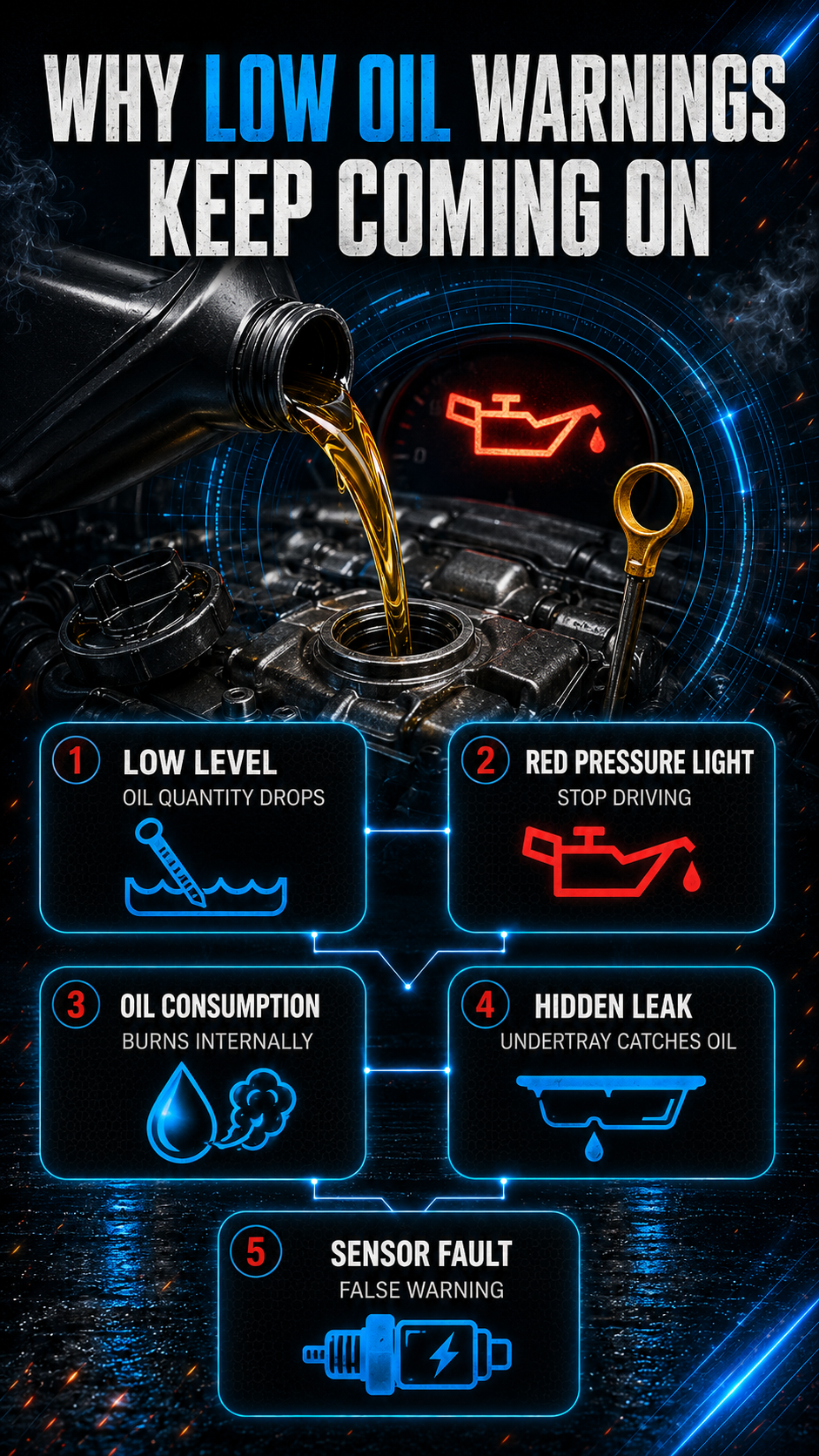
A low oil warning can return even when there is no puddle under the vehicle. The engine may be using oil internally, a leak may be collecting on an underbody panel, or the oil level sensor may be reporting an incorrect reading.
The first step is to identify whether the dashboard is showing a low oil level warning or a red oil pressure warning. These messages describe different conditions and require different responses.
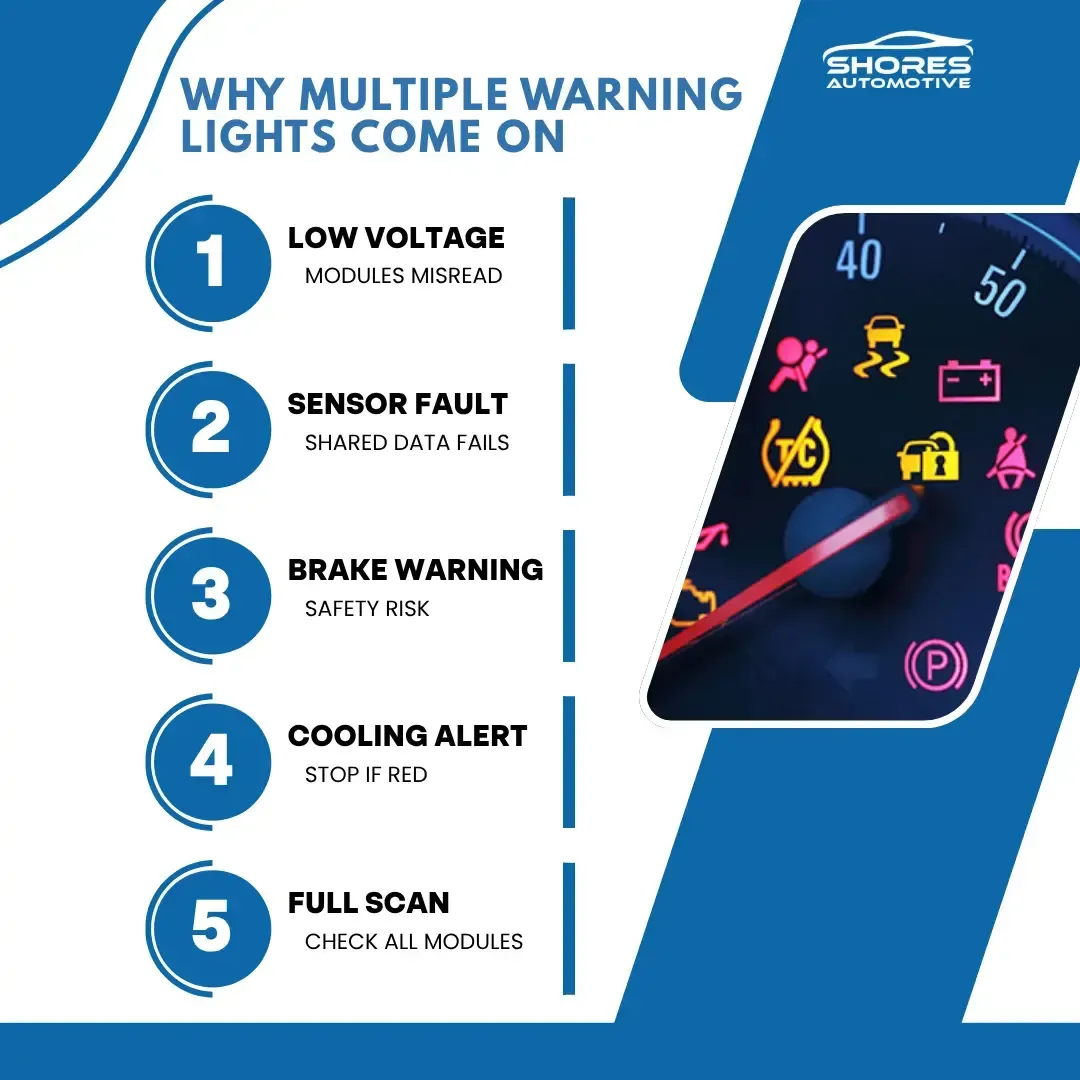
Why a European Car Stumbles After a Hot Restart
A hot engine keeps transferring heat after shutdown. Heat soak can change fuel pressure, vapor flow, electrical resistance, and sensor readings. A weak component may work cold but cause hot restart hesitation.
Heat Soak Changes Operating Conditions
Fuel rails, injectors, coils, sensors, and wiring remain near hot parts after shutdown. Under-hood temperature can keep rising briefly. Boca Raton heat and slow I-95 traffic may expose an existing weakness.
Intermittent Faults May Not Set a Warning Right Away
The engine computer may correct the mixture or idle before a warning threshold is reached. The car can recover while storing only pending data or misfire counts. A cold inspection may miss the condition.
Common Causes of Hot Restart Hesitation
Fuel pressure loss, excess vapor, a heat-sensitive sensor, weak ignition, or unmetered air can feel alike. Reproducing the fault helps prevent unnecessary parts replacement.
Fuel Pressure Loss or Injector Leak-Down
A weak pump, pressure-control problem, leaking injector, or check valve can make the next start too lean or rich. Our fuel pressure and fuel delivery service checks pressure behavior, injector indicators, fuel trims, and target-versus-actual rail data when supported.
Purge Valve and Fuel Vapor Problems
An EVAP purge valve that does not seal can feed excess vapor into the intake during a hot soak. The next start may run rich or stumble. A fuel odor or post-refueling pattern is useful evidence, but the system still needs testing.
Heat-Sensitive Crankshaft or Camshaft Sensors
A crankshaft or camshaft sensor can produce an unstable signal as heat raises internal resistance. The engine may start poorly or lose synchronization. Manufacturer-level data can reveal signal or correlation faults.
Ignition, Air Metering, and Intake Faults
Weak coils, worn plugs, airflow errors, vacuum leaks, or crankcase ventilation faults can disturb the mixture. Our Mercedes-Benz diagnostics, for example, use XENTRY/DAS to review live data and fault memory on supported platforms.
Details That Help Narrow the Problem
If the car stalls after restarting when hot, note how long it sat, whether cranking was normal, how long the stumble lasted, and whether it followed refueling.
Normal Cranking Versus a Slow or No-Crank Restart
Normal cranking followed by rough running points toward combustion or engine management. Slow cranking, a click, or no crank follows a different battery, starter, voltage, or authorization diagnostic path.
Fuel Odor, Warning Lights, and Recovery Time
A fuel odor may suggest a rich restart or leak. A flashing light can indicate an active misfire. Our guide to a check engine light diagnostic in Boca Raton explains why live data matters beyond the code.
When a Hot Restart Stumble Is Unsafe to Drive
Do not drive when the engine stalls repeatedly, the check engine light flashes, fuel leaks, or acceleration is unsafe.
Flashing Check Engine Light or Repeated Stalling
An active misfire can overheat the catalytic converter. Repeated stalling can leave you without power in traffic. If the vehicle becomes disabled on a covered highway, Florida Road Ranger highway assistance can help protect the scene and provide limited roadside support.
Temporary Recovery Does Not Mean the Fault Is Gone
A vehicle that smooths out may still have a developing fuel, sensor, or ignition problem. Arrange testing before relying on it for heavy traffic, long trips, or repeated short stops.
How We Diagnose an Intermittent Hot Restart Fault
European drivability diagnostics should reproduce the triggering temperature and timing. We compare the driver's timeline with scan data and direct tests before recommending parts.
Reproduce the Symptom at Operating Temperature
We may warm the engine, wait for the reported interval, and restart while monitoring data. The goal is to capture the stumble, not confirm a normal cold start.
Compare Live Data With the Driver's Timeline
Testing may include misfire counters, fuel pressure, fuel trims, injector corrections, purge command, coolant temperature, crank and cam synchronization, and airflow. Stored and pending faults are reviewed with freeze-frame information. The failed test determines the repair path.
What Boca Raton Drivers Can Do Before Service
Record the drive time, stop length, cranking speed, stumble duration, fuel odor, warning lights, refueling, and recent work. A short video can help when the symptom clears. If the car stalls, shows a flashing warning light, smells strongly of fuel, or cannot merge safely, stop driving and arrange assistance.
Takeaways
When a European car stumbles after a hot restart, the cause may involve fuel pressure, injector leak-down, vapor control, a heat-sensitive sensor, weak ignition, or unmetered air. The fact that it runs normally when cold does not rule out a measurable fault.
Engine diagnostics in Boca Raton should recreate the warm restart and compare live data with the driver's timeline. A flashing light, fuel leak, repeated stalling, or unsafe acceleration calls for stopping rather than waiting for the engine to smooth out.
Frequently Asked Questions
Why does my European car stumble only after a hot restart?
Heat can change fuel pressure, vapor flow, sensor signals, or ignition performance. Testing at operating temperature shows which system moves out of range.
Can a weak fuel pump cause hot restart hesitation?
Yes, a weak fuel pump or pressure-control fault can cause hot restart hesitation. Pressure may fall during the stop or recover too slowly on restart.
Can a bad sensor fail only when the engine is hot?
Yes, a crankshaft, camshaft, temperature, or airflow sensor can become unstable when hot. Its signal may return after cooling, so temperature-based testing matters.
Is it safe to drive if the engine smooths out after restarting?
It may be safe to drive if the engine smooths out, but not if it stalls, leaks fuel, or has unreliable acceleration. If the warning light flashes, schedule a diagnosis and ask whether the vehicle should be driven.
How do technicians diagnose a hot restart problem with no warning light?
Technicians recreate the warm restart and compare pending faults, misfire counts, and live system data. Direct pressure or electrical tests can confirm the suspected circuit or component.
Schedule Hot Restart Engine Diagnostics in Boca Raton
If your European car stumbles, hesitates, or nearly stalls after a warm restart, contact our team to schedule testing at Shores Automotive. We can reproduce the heat-soak pattern, review manufacturer-level data, and explain the confirmed cause before repair approval.
Call
(561) 391-0260 or visit us at
2544 NW 2nd Ave, Boca Raton, FL 33431 near Glades Road and NW 2nd Avenue.
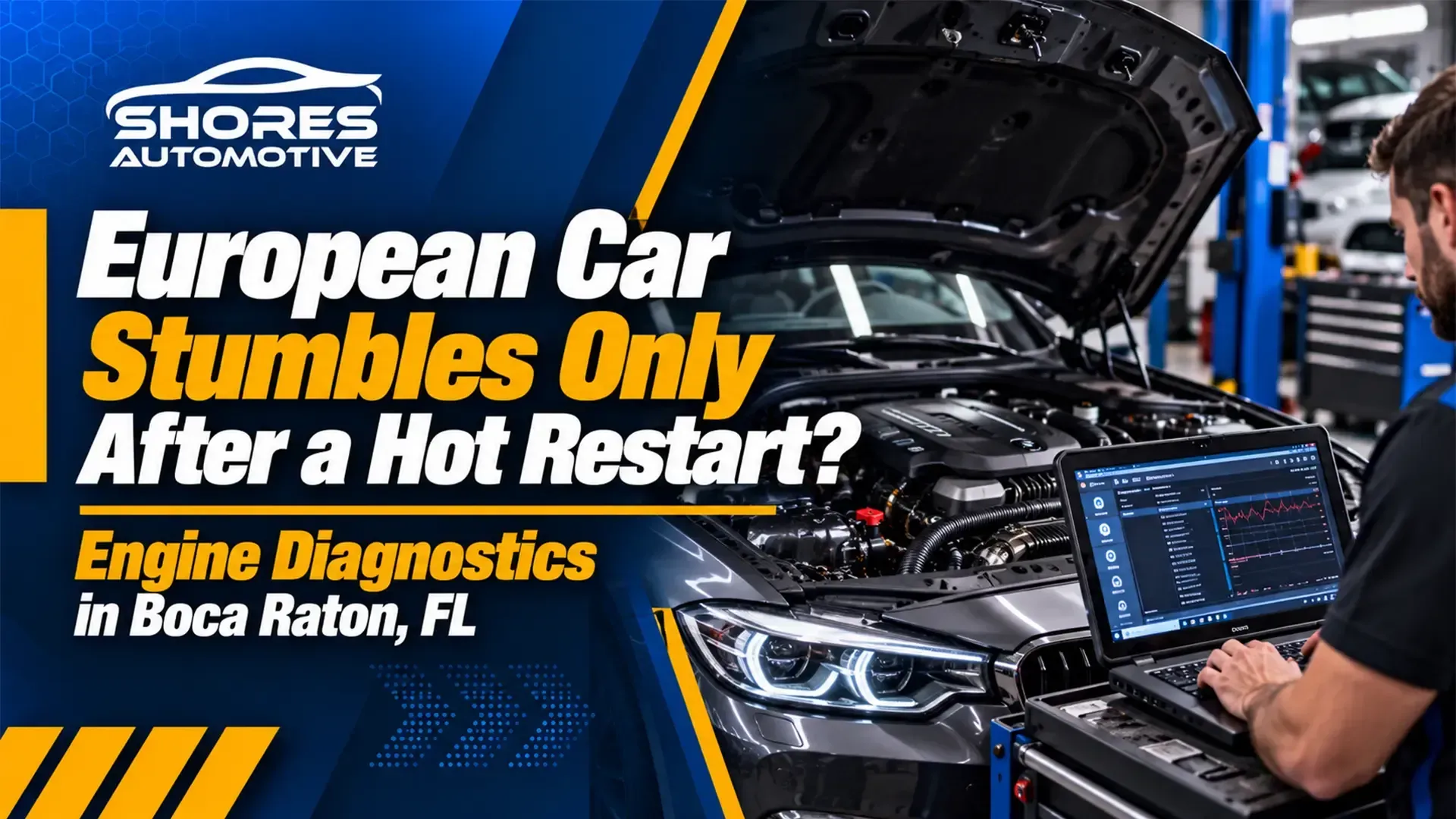
When a European car stumbles after a hot restart, heat may be exposing a fuel-pressure, sensor, ignition, or air-metering fault. The engine may start, shake, hesitate, or nearly stall before smoothing out.
A hot restart follows a brief stop after the engine is fully warm. This differs from a cold-start or no-crank problem.
At Shores Automotive, our
hesitation and misfire diagnosis uses symptom timing and live data to identify the system that changes when the engine is hot. Reproducing the symptom under the same conditions helps narrow the cause before repairs are recommended.
A low oil warning can return even when there is no puddle under the vehicle. The engine may be using oil internally, a leak may be collecting on an underbody panel, or the oil level sensor may be reporting an incorrect reading.
The first step is to identify whether the dashboard is showing a low oil level warning or a red oil pressure warning. These messages describe different conditions and require different responses.
Get started today
Mon – Fri | 7:30am – 4:00pm
Sat – Sun | Closed