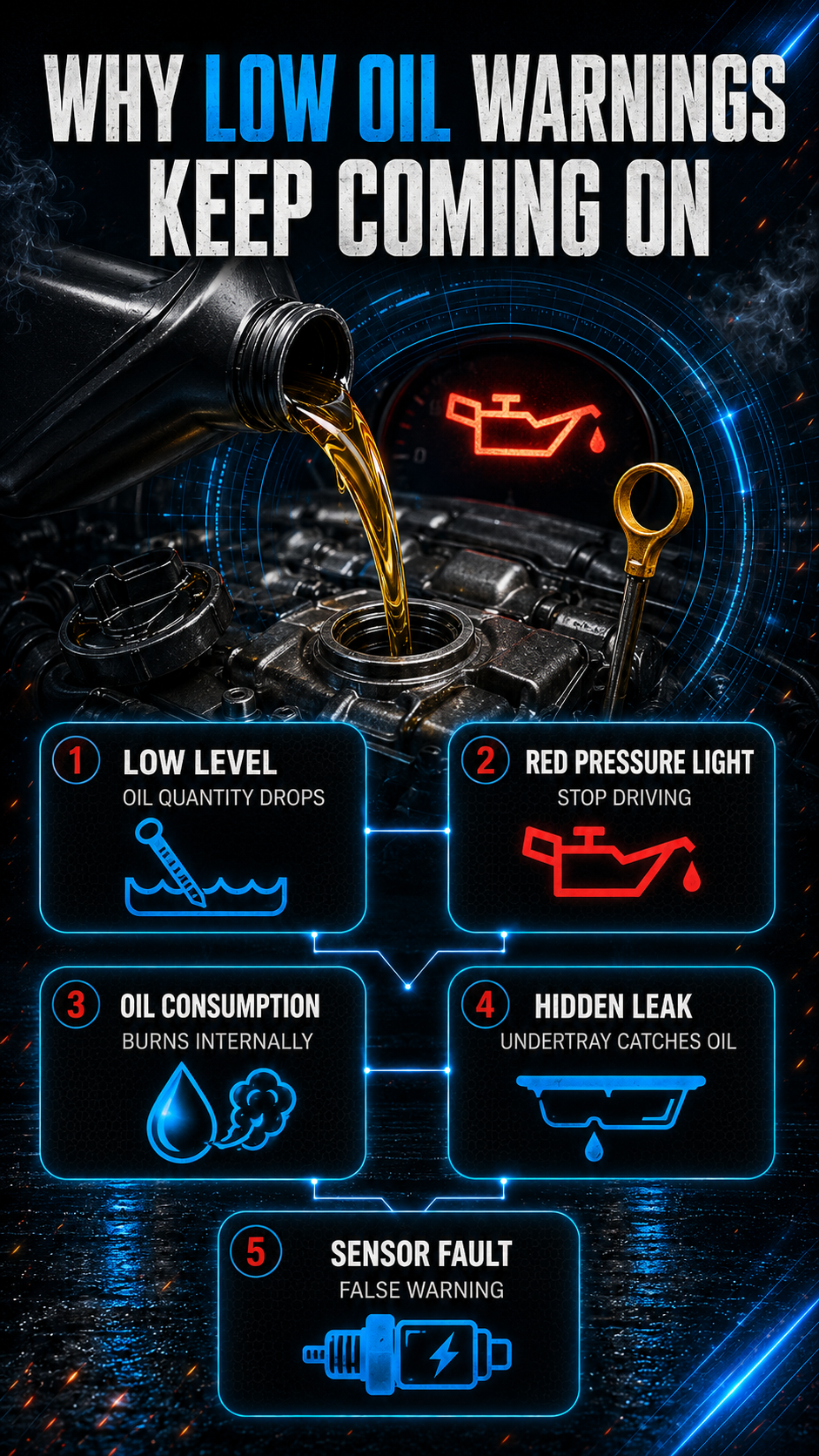
A low oil warning can return even when there is no puddle under the vehicle. The engine may be using oil internally, a leak may be collecting on an underbody panel, or the oil level sensor may be reporting an incorrect reading.
The first step is to identify whether the dashboard is showing a low oil level warning or a red oil pressure warning. These messages describe different conditions and require different responses.
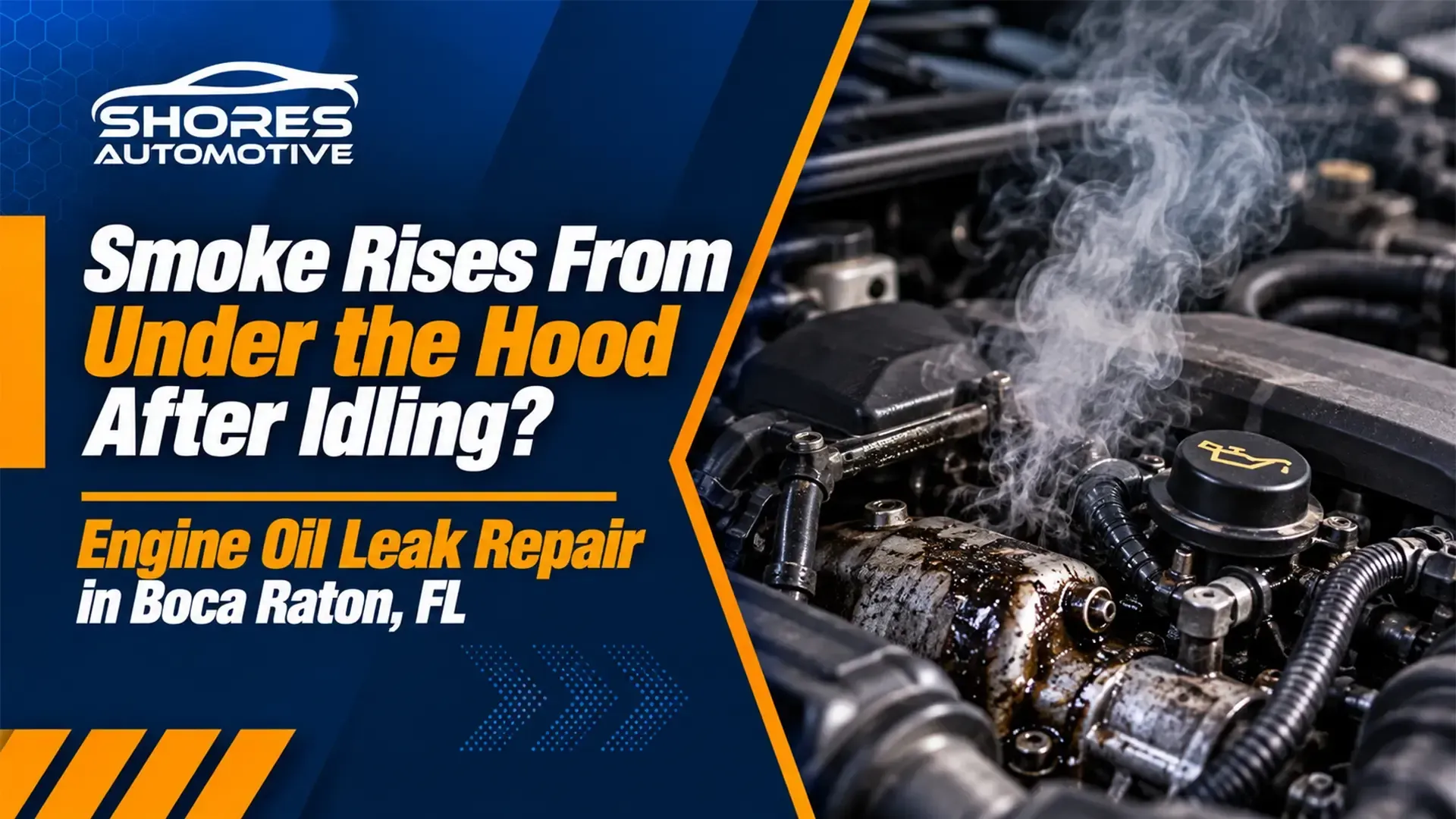
Why Smoke Rises From Under the Hood After Idling
Smoke may appear at idle because engine-bay heat rises while airflow falls. A slow leak can reach a hot surface while stopped at a traffic light, during a parking wait, or on a Boca Raton commute.
Heat Builds While the Vehicle Sits
The engine bay receives less natural airflow at idle than at road speed, while turbochargers and exhaust parts remain hot. Stop-and-go travel near Glades Road or I-95 can expose an existing leak. Over time, repeated South Florida heat cycles can also harden older seals and make existing leaks more likely.
Oil on Hot Surfaces Produces Smoke
Oil leaking onto hot engine parts can create wispy blue-gray smoke and a sharp odor. Airflow may disperse it once the vehicle moves. A burning oil smell after idling is useful evidence, but it does not identify the failed seal.
Common Oil Leak Sources That Can Cause Smoke
Leaks high on the engine are most likely to reach hot exhaust parts. Common sources include valve cover gaskets, filter housing seals, timing covers, vacuum pumps, and turbo oil lines.
Valve Cover Gaskets and Upper Engine Seals
A valve cover gasket can leak toward an exhaust manifold, turbo housing, or heat shield. On some engines, oil can also enter spark plug wells and contribute to misfires.
Oil Filter Housings and Cooler Seals
Oil filter housing and cooler seals can leak onto belts, electrical parts, or lower covers. If the leak appears with warnings, rough running, or oil consumption, our broader engine diagnostics may also be needed.
Turbo Oil Lines, Timing Covers, and Other Leak Points
Turbo lines, cam seals, timing covers, oil pans, and rear main seals can leak. Our Porsche service in Boca Raton, for example, addresses rear main seal, valve cover gasket, and oil separator leaks on supported Porsche platforms.
What the Smoke, Smell, and Location Can Tell You
Color, odor, and location can narrow the inspection, but none confirms the source. Note whether smoke comes from under the hood or tailpipe and whether a warning appears.
Blue-Gray Smoke and a Burning-Oil Odor
Blue-gray smoke under the hood often suggests oil on a hot part. Tailpipe smoke may indicate oil entering combustion, which follows a different diagnostic path.
White Steam or an Electrical Smell
White vapor with a sweet smell may be coolant steam. A plastic odor, flickering lights, or smoke near wiring can signal an electrical fault. If these warning signs escalate to flames or fast-growing smoke, do not open the hood fully.
When to Shut Off the Engine
Shut the engine off for active smoke or a warning for low oil pressure, overheating, or an electrical fault. Continued idling may feed more oil onto a hot part.
Active Smoke, Flames, or a Strong Electrical Smell
Move safely out of traffic, turn the engine off, and have everyone exit if smoke is heavy or flames appear. Move away and call 911 for a fire. On a covered highway, Florida Road Ranger highway assistance can help with a disabled vehicle, but an active fire requires emergency services.
Oil Pressure, Low Oil, or Temperature Warnings
A red oil pressure warning, rising temperature gauge, knock, or rapidly falling level calls for shutdown. A yellow low-level message may differ, but it still needs the correct check. Our article about a low oil warning with no visible leak explains why oil can disappear without a driveway spot.
How We Diagnose a Smoking Engine Oil Leak
A European oil leak diagnosis traces fresh oil to its highest active source. The drip point may not be where the leak began.
Inspect After a Controlled Warm-Up
We review when smoke appears, verify the oil level, and inspect above and below. A controlled warm-up can reproduce the idle condition while the technician watches for fresh oil movement.
Clean, Trace, and Verify the Source
Old residue can hide the active path. Cleaning, removing an undertray, using tracing dye when needed, and rechecking after warm-up can reveal the failed seal. We also inspect crankcase ventilation because excess pressure can cause repeat leakage. After repair, we run the engine and recheck the area.
What Boca Raton Drivers Can Do Before Service
Record when smoke appears, its color, smell, dashboard message, and location. After cooling, check the oil only as the owner's manual directs. Do not overfill. Avoid driving with active smoke, oil on a hot surface, or a red warning. If the symptom stops, call before driving or arranging a tow.
Takeaways
When smoke rises from under the hood after idling, leaking oil on a hot surface is a common cause. Coolant steam, wiring faults, and spilled fluid can look similar, so smoke color and odor are clues rather than a final diagnosis.
Engine oil leak repair in Boca Raton should begin with cleaning, tracing, and confirming the source. Shut the engine off for active smoke, flames, electrical odor, red oil pressure warnings, overheating, or abnormal engine noise.
Frequently Asked Questions
Is smoke under the hood always caused by an oil leak?
No, smoke under the hood is not always caused by an oil leak. Coolant steam, an electrical fault, spilled fluid, or debris on a hot component can produce a similar symptom.
Can I drive when smoke appears after idling?
Do not drive while smoke is active or when a red warning, electrical smell, flame, or abnormal engine noise is present. If the smoke stops and no warning remains, call a repair shop for guidance before driving.
Why does an oil leak smoke only while the car is idling?
An oil leak may smoke only at idle because engine-bay heat builds while natural airflow decreases. Once the car moves, airflow can disperse light smoke even though the leak remains.
Can an engine oil leak exist without a puddle?
Yes, an engine oil leak can exist without a puddle. Oil may collect on an undertray, spread across the engine, or burn on a hot surface before reaching the ground.
How do technicians find the source of an engine oil leak?
Technicians inspect the engine, clean old residue, trace fresh oil movement, and may use UV dye or a controlled warm-up. They confirm the highest active source before recommending a gasket, seal, line, or related repair.
Schedule Engine Oil Leak Diagnosis in Boca Raton
If smoke or a burning-oil smell appears after idling, contact our team to schedule inspection at Shores Automotive. We can check the oil level, trace the leak path, inspect nearby hot surfaces, and explain whether the vehicle should be driven or towed.
Call
(561) 391-0260 or visit us at
2544 NW 2nd Ave, Boca Raton, FL 33431 near Glades Road and NW 2nd Avenue.
When smoke rises from under the hood after idling, engine oil may be leaking onto a hot exhaust or engine surface. Low airflow at idle lets heat collect, making a small leak easier to notice. However, coolant, wiring, spilled fluid, or debris can cause a similar symptom. Shut the engine off if you notice heavy smoke, an electrical smell, a warning, or flames.
At Shores Automotive, our
engine oil leak repair starts with locating the source before replacing any gasket or seal. This helps us make the right repair and address the actual cause of the leak.
A low oil warning can return even when there is no puddle under the vehicle. The engine may be using oil internally, a leak may be collecting on an underbody panel, or the oil level sensor may be reporting an incorrect reading.
The first step is to identify whether the dashboard is showing a low oil level warning or a red oil pressure warning. These messages describe different conditions and require different responses.
Get started today
Mon – Fri | 7:30am – 4:00pm
Sat – Sun | Closed