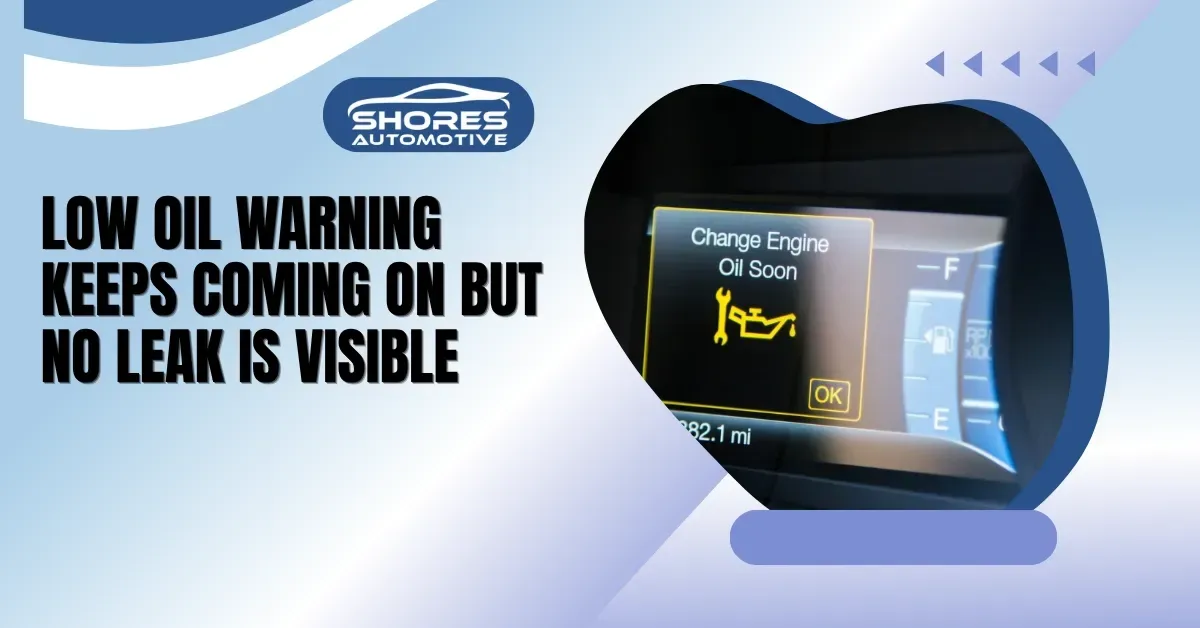
A low oil warning can return even when there is no puddle under the vehicle. The engine may be using oil internally, a leak may be collecting on an underbody panel, or the oil level sensor may be reporting an incorrect reading.
The first step is to identify whether the dashboard is showing a low oil level warning or a red oil pressure warning. These messages describe different conditions and require different responses.
Key Takeaways
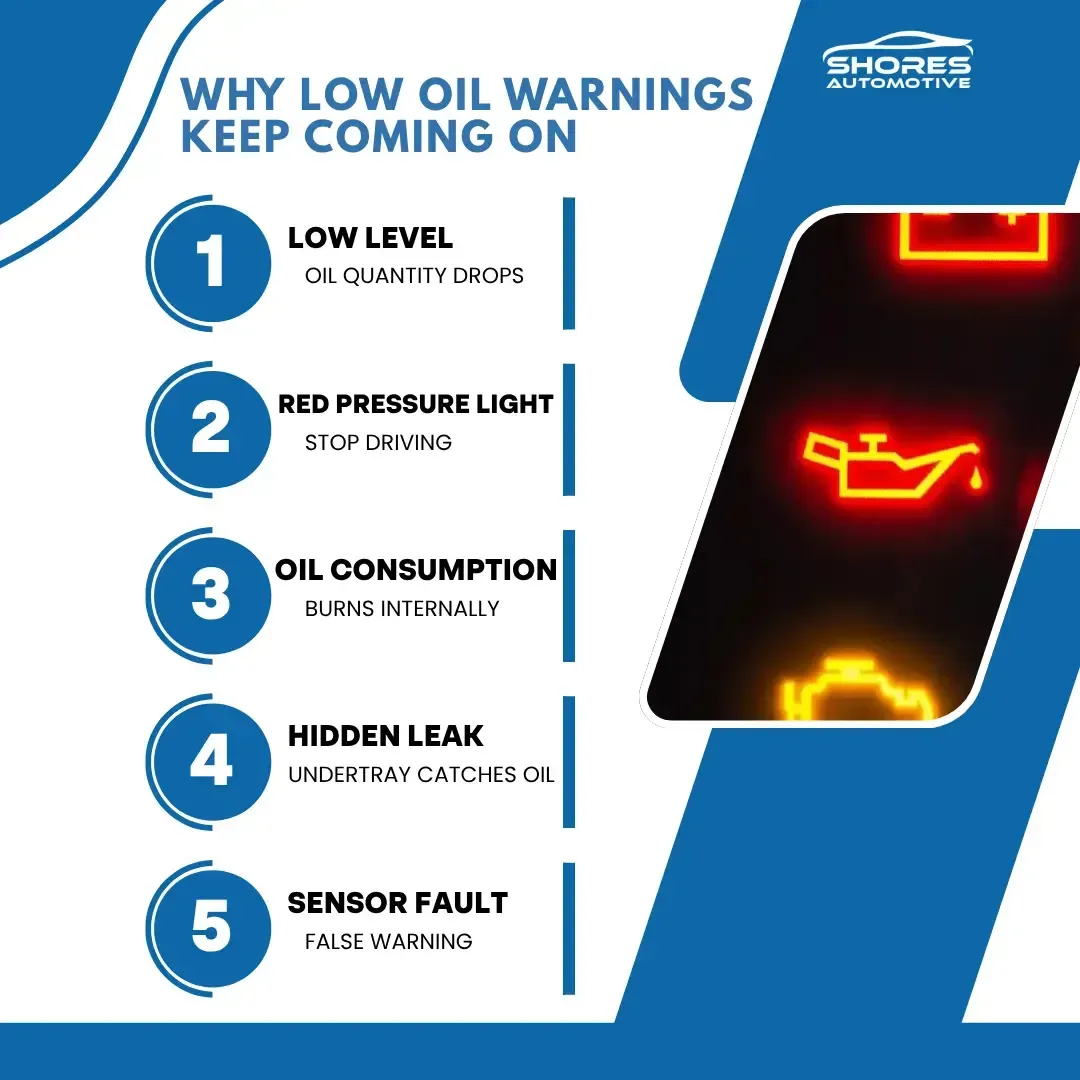
- A yellow low oil level message and a red oil pressure warning are not the same condition.
- Oil may be consumed inside the engine or leak onto an undertray without leaving a visible spot on the ground.
- A faulty oil level sensor, wiring problem, or incorrect electronic reading can cause repeated warnings.
- Check the oil exactly as the owner’s manual directs, and use only the approved oil specification when adding oil.
- Stop the engine for a red oil pressure warning, knocking noise, smoke, or signs of severe oil loss.
Start by Identifying the Oil Warning
European vehicles may display separate warnings for oil level, oil pressure, oil temperature, or oil service. Read the complete message and check the owner’s manual before deciding whether the vehicle can be driven.
A Yellow Oil Level Warning Usually Means the Quantity Is Low
A yellow oil can symbol or a message asking you to add oil commonly refers to the amount of oil in the engine. The vehicle may still normally run, but the level should be checked before additional driving.
Do not add a full quart automatically. Some electronic systems provide a measured reading or a specific top-off amount. Adding too much oil can create aeration, crankcase pressure, seal problems, or damage to emissions components.
A Red Oil Pressure Warning Requires Immediate Action
A red oil pressure light can indicate that the engine is not receiving sufficient lubrication. Safely move out of traffic, shut the engine off, and do not restart it until the cause is evaluated.
Low oil level can cause low pressure, but a failed oil pump, blocked pickup, incorrect filter, internal engine wear, or pressure-sensor fault may also be involved. Driving with truly low oil pressure can damage bearings, camshafts, turbochargers, and other lubricated parts within a short distance.
Why Oil Can Disappear Without a Visible Puddle
No visible leak does not confirm that the engine is holding the correct amount of oil. Oil can leave the engine through internal consumption, a concealed external leak, or a small leak that burns before it reaches the ground.
The Engine May Be Consuming Oil Internally
Oil can enter the combustion process through worn piston rings, valve stem seals, turbocharger seals, or a malfunctioning crankcase ventilation system. The amount may be small enough that obvious blue smoke is not present during normal driving.
Possible clues include frequent top-offs, oily intake components, spark plug deposits, smoke after idling or acceleration, and an oil level that falls at a repeatable rate. Some manufacturers publish an acceptable consumption range, but a vehicle that suddenly begins using more oil still needs evaluation.
An External Leak May Be Hidden
Many European vehicles have lower engine covers that can catch leaking oil. Oil may leak from the filter housing, valve cover, timing cover, oil pan, vacuum pump, rear main seal, or turbocharger line. Instead of dripping onto the driveway, the oil may spread across the cover.
Small leaks can also reach a hot exhaust or engine surface and produce a burning odor before the oil reaches the ground. An inspection may require removing shields and cleaning the affected area so the source can be traced accurately.
Recent Service or an Incorrect Fill Level Can Trigger the Message
A warning that appears soon after service may have several causes. These can include an underfilled engine, an incorrect filter, a sealing problem, or a drain plug concern. It may also result from checking the electronic oil level before the required measurement conditions were met. The oil specification and quantity vary by engine.
Review the invoice and contact the servicing shop when the warning appears shortly after an oil change. Avoid guessing at the amount needed, especially on engines that use electronic oil measurement instead of a traditional dipstick.
Oil Level Sensor and Electrical Problems
An oil level sensor problem in a European car can cause a warning even when the physical oil level is correct. The sensor may share information with the engine computer, instrument cluster, and service reminder system.
A Faulty Sensor Can Send an Incorrect Reading
Oil level sensors can fail internally or become affected by contamination, heat, wiring damage, loose connections, corrosion, or low system voltage. Some vehicles may display an unavailable or implausible oil measurement rather than a simple low-level message.
A technician should compare the dashboard reading with the actual oil level and manufacturer-specific scan data. Replacing the sensor without verifying the oil level, wiring, and fault history may not correct the problem.
Oil Level and Oil Pressure Sensors Serve Different Purposes
Oil level sensors can fail internally or become affected by contamination, heat, wiring damage, loose connections, corrosion, or low system voltage. Some vehicles may display an unavailable or implausible oil measurement rather than a simple low-level message.
A technician should compare the dashboard reading with the actual oil level and manufacturer-specific scan data. Replacing the sensor without verifying the oil level, wiring, and fault history may not correct the problem.
How to Confirm the Oil Level Safely
Follow the procedure in the owner’s manual because the correct method varies by model. The engine may need to be warm, fully cold, idling, or switched off for a set amount of time before the reading is valid.
For Vehicles With a Dipstick
- Park on level ground and shut the engine off for the time specified by the manufacturer.
- Remove the dipstick, wipe it clean, insert it fully, and remove it again to read the level.
- Confirm that the oil sits between the minimum and maximum marks.
- Look for coolant contamination, metal particles, or an unusual fuel odor, but do not judge oil life by color alone.
For Vehicles With Electronic Oil Measurement
- Use the dashboard or infotainment oil-level menu and follow every condition shown on the screen.
- Wait until the system completes the measurement instead of relying on an old stored reading.
- Do not assume the sensor is faulty until the correct measurement procedure has been completed.
- If the reading is unavailable, inconsistent, or repeatedly low after a correct top-off, schedule a diagnosis.
Add Only the Approved Oil and Amount
Use the viscosity and manufacturer approval listed for the engine, not simply any synthetic oil. Add a small amount at a time, allow the reading to update, and stop before the level reaches above the maximum mark.
Keep a record of the date, mileage, and amount added. This information helps a technician calculate the consumption rate and identify whether the warning follows a consistent pattern.
When the Vehicle Should Not Be Driven
Do not continue driving solely because there is any oil on the ground. The warning color, oil reading, engine sound, smoke, and vehicle behavior determine whether the engine can be operated safely.
Stop the Engine and Arrange Assistance When Needed
- The red oil pressure warning remains on after startup or appears while driving.
- The engine knocks, rattles, ticks loudly, loses power, or runs roughly.
- The oil level is below the measurable range or falls again soon after topping off.
- Smoke, a strong burning-oil odor, or oil on hot engine components is present.
- A large leak, damaged oil pan, or recent impact under the vehicle is suspected.
Roadside assistance or towing is the safer choice when the oil pressure is uncertain. Restarting the engine repeatedly to see whether the light clears can increase damage if lubrication is actually lost.
How a Professional Diagnosis Finds the Cause
A low oil warning diagnosis in Boca Raton, FL, should begin with the exact message, oil level, service history, and rate of oil loss. The technician can then separate a true quantity problem from a pressure, sensor, wiring, or internal engine concern.
Testing May Include More Than a Visual Leak Check
- Verify the oil level and confirm that the oil and filter meet the vehicle specification.
- Scan the engine and instrument modules for oil-level, pressure, temperature, and communication faults.
- Inspect the upper engine, lower covers, filter housing, oil pan, seals, ventilation system, and turbocharger oil lines where applicable.
- Clean the area or use tracing dye when the leak source is not immediately visible.
- Measure mechanical oil pressure when the warning or symptoms suggest a pressure concern.
- Review consumption history and perform engine tests when internal oil use is suspected.
European Diagnostics Help Avoid Guessing at Parts
European vehicles often store manufacturer-specific oil level, pressure, temperature, and service data. European engine diagnostics can compare those readings with the physical inspection before a sensor, seal, ventilation component, or internal engine part is recommended.
When maintenance is due, oil change and preventive maintenance should use the manufacturer-specified oil, filter, fill quantity, and reset procedure. A confirmed external leak may require engine oil leak repair after the source is isolated.
Schedule European Oil Warning Light Service in Boca Raton, FL
Shores Automotive provides dealer-level diagnostics for BMW, Mercedes-Benz, Porsche, Audi, Land Rover, Jaguar, MINI, Maserati, Bentley, Rolls-Royce, Alfa Romeo, Aston Martin, and other European and exotic vehicles. The diagnostic process can help determine whether the warning comes from low oil, internal consumption, a concealed leak, a sensor fault, or a true pressure problem.
The shop is located at 2544 NW 2nd Ave in Boca Raton, FL. Shores Automotive uses OEM or OE-equivalent parts, provides written recommendations before repairs begin, and offers a 3-year/36,000-mile nationwide warranty on qualifying work.
Schedule service with Shores Automotive or call (561) 391-0260 when a low oil warning returns, the electronic reading is unavailable, or the oil level drops between services.
Frequently Asked Questions
Can a low oil level damage a European engine?
Yes, a low oil level can damage a European engine. A low oil level reduces the reserve available for lubrication and cooling, especially during acceleration, cornering, or high engine load. If the level becomes low enough to affect oil pressure, engine and turbocharger damage can occur quickly.
Why does my European car say low oil with no leak?
The engine may be consuming oil internally, leaking into a lower cover, or losing a small amount on a hot surface. A faulty oil level sensor or wiring problem can also create an incorrect warning, so the actual level and sensor data should both be checked.
How often should I check the oil level?
Check the oil according to the owner’s manual and more often when the vehicle has a known consumption concern, high mileage, or an active warning. Checking before a long trip and recording any top-off amount can help identify a developing pattern.
What oil should I add to my European car?
Use the viscosity and manufacturer approval listed in the owner’s manual or service information for the exact engine. The word synthetic alone does not confirm that an oil meets the required BMW, Mercedes-Benz, Porsche, Volkswagen, Land Rover, or other manufacturer specification.
Can a faulty oil filter cause an oil warning?
An incorrect, damaged, loose, or severely restricted filter can contribute to leaks or oil pressure problems. It does not usually cause a true low oil level by itself, so the warning type, oil quantity, filter installation, and actual pressure must be checked.
Conclusion
A low oil warning with no visible leak should be treated as a real diagnostic concern. The cause may be internal oil consumption, a leak hidden by an underbody cover, an incorrect fill level, a sensor fault, or a lubrication pressure problem. Confirm the warning type, follow the correct oil-level procedure, and avoid overfilling. Shut the engine off for a red oil pressure warning or abnormal engine noise. When the warning keeps returning, schedule European oil warning light service in Boca Raton, FL, so the cause can be tested before engine damage develops.
Get started today
Mon – Fri | 7:30am – 4:00pm
Sat – Sun | Closed