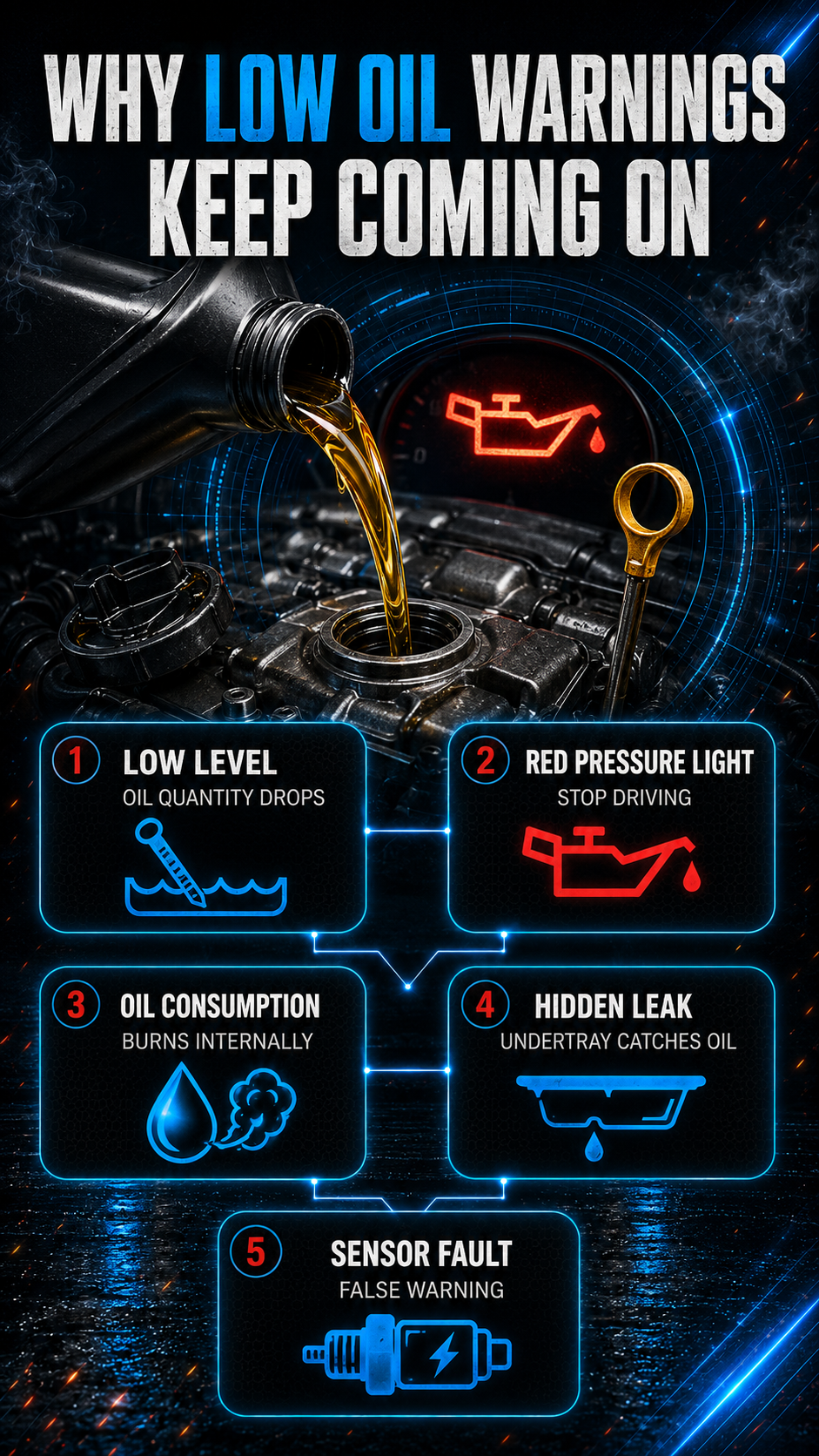
A low oil warning can return even when there is no puddle under the vehicle. The engine may be using oil internally, a leak may be collecting on an underbody panel, or the oil level sensor may be reporting an incorrect reading.
The first step is to identify whether the dashboard is showing a low oil level warning or a red oil pressure warning. These messages describe different conditions and require different responses.
Tramlining Starts at the Tire Contact Patch
Tramlining in a car begins where the tread meets the pavement. Long channels, repaired seams, and worn wheel paths can guide the tread in a direction that differs from your steering input. The sensation should ease when the surface becomes smooth and level.
Tire width, tread pattern, sidewall stiffness, and wheel offset affect how strongly a vehicle responds. A car with precise steering may pass more of that feedback to the driver than a softer touring setup.
Performance Tires Can Make It More Noticeable
Wide, low-profile, and run-flat tires may follow pavement grooves more readily because they have a broad or stiff contact patch.
Fitment still matters. Because BMW models commonly use performance, run-flat, or staggered setups, our BMW service considers the tire and suspension design built into the vehicle. A mismatched tire model, size, load rating, or tread depth can change steering feel.
Road Texture or a Mechanical Problem?
The key distinction is whether the movement appears only on certain pavement or continues across many roads. Surface-related tramlining changes with the road, while a vehicle problem tends to create a repeatable pull, wander, vibration, or off-center steering wheel.
Clues That Point to the Pavement
Road texture is the likely influence when the car moves slightly on grooved pavement but settles on a smooth, flat lane. You may notice the change between sections of I-95, Glades Road, or Federal Highway / US-1 as pavement texture and repairs vary.
A consistent pull to the same side on several level roads needs more attention than a brief movement that follows visible grooves.
Signs Your Car Needs an Inspection
An inspection is appropriate when the steering wheel sits off-center, the car keeps drifting on smooth roads, or corrections feel larger over time. Uneven tire wear, fresh vibration, steering looseness, clunks, or a recent curb or pothole impact also point beyond normal road feedback.
Do not assume an alignment adjustment will fix every symptom. Our suspension, steering, and wheel services help identify worn bushings, tie rods, wheel damage, or other movement that can keep a vehicle from tracking correctly.
Alignment and Tire Checks That Find the Cause
A useful inspection compares tire condition, pressure, fitment, wheel condition, alignment readings, and steering or suspension wear. Looking at the system as a whole helps avoid correcting one measurement while missing the reason it changed.
Tire Pressure, Fitment, and Tread
The first checks are simple: confirm cold tire pressure against the vehicle label, inspect all four tread patterns, and compare the installed sizes and specifications. The Florida Department of Highway Safety and Motor Vehicles recommends monthly tire pressure checks and regular tread inspections.
Feathering, inside-edge wear, cupping, or a large tread-depth difference may make a tire react more strongly to grooves. If the tires are damaged, aged, mismatched, or worn beyond useful service, the correct next step may be new tire installation rather than alignment alone.
Alignment, Wheels, and Suspension
Alignment measurements show whether camber, caster, and toe remain within the vehicle maker’s specifications. Toe changes often affect tracking and tread wear, while caster differences can contribute to a directional pull. A technician should inspect steering and suspension components before making adjustments because loose or worn parts may prevent the settings from holding.
The wheels and tires also need a close look for bends, belt concerns, or excessive road-force variation. Balance problems usually cause vibration rather than groove tracking, but both symptoms can appear together after an impact or tire damage.
What Boca Raton Drivers Can Do Next
Start by noting where the movement happens, which direction the car goes, and whether speed, braking, or rain changes it. Check cold pressures, look for visible tire damage, and avoid making repeated alignment changes without a full inspection.
South Florida heat can affect tire pressure and rubber condition, while heavy rain makes healthy tread especially important. If the car wanders on smooth local roads or feels unstable at I-95 speeds, schedule a tire inspection in Boca Raton.
Takeaways
A car may follow grooves because its tires are responding to the pavement, especially when they are wide, low-profile, or stiff. The behavior needs attention when it continues on smooth roads or appears with an off-center steering wheel, vibration, noise, loose steering, or uneven tire wear.
Pressure, tread, fitment, wheel condition, alignment angles, and suspension wear should be checked together. That approach separates normal road feedback from a condition that needs service.
Frequently Asked Questions
Is it normal for a car to follow grooves in the road?
Yes, mild movement can be normal on visibly grooved or repaired pavement. The car should settle when the road becomes smooth, and the steering should not require large or constant corrections.
Can bad alignment make tramlining worse?
Yes, incorrect toe, camber, or caster can make a vehicle more sensitive to grooves and road crown. Alignment readings should be paired with tire and suspension checks so the actual cause is addressed.
Can tire pressure cause a car to wander?
Yes, low or uneven tire pressure can change the contact patch and make steering feel less consistent. Check pressures when the tires are cold and use the specification on the vehicle label, not the maximum shown on the tire sidewall.
Why do wide or run-flat tires follow road grooves?
Wide or run-flat tires can follow grooves because their broad or stiff contact patches react more strongly to pavement channels. Correct fitment, pressure, tread condition, and alignment help keep that normal sensitivity from becoming excessive.
Should I replace my tires if the car tramlines?
Not necessarily, because normal tire design and road texture can cause mild tramlining. Replacement may make sense when inspection finds damage, severe or uneven wear, mismatched fitment, aging rubber, or an unsuitable tire construction.
Schedule an Alignment and Tire Inspection in Boca Raton
When groove tracking continues on smooth pavement, our team can inspect tire pressure, tread, fitment, wheels, alignment, steering, and suspension before recommending a repair. Shores Automotive in Boca Raton, FL, services European, exotic, Asian, and domestic vehicles with Hunter alignment equipment and vehicle-specific specifications.
Call
(561) 391-0260 to schedule an inspection, or visit us at
2544 NW 2nd Ave, Boca Raton, FL 33431. We will explain what the checks show and help you choose the next step for your vehicle.
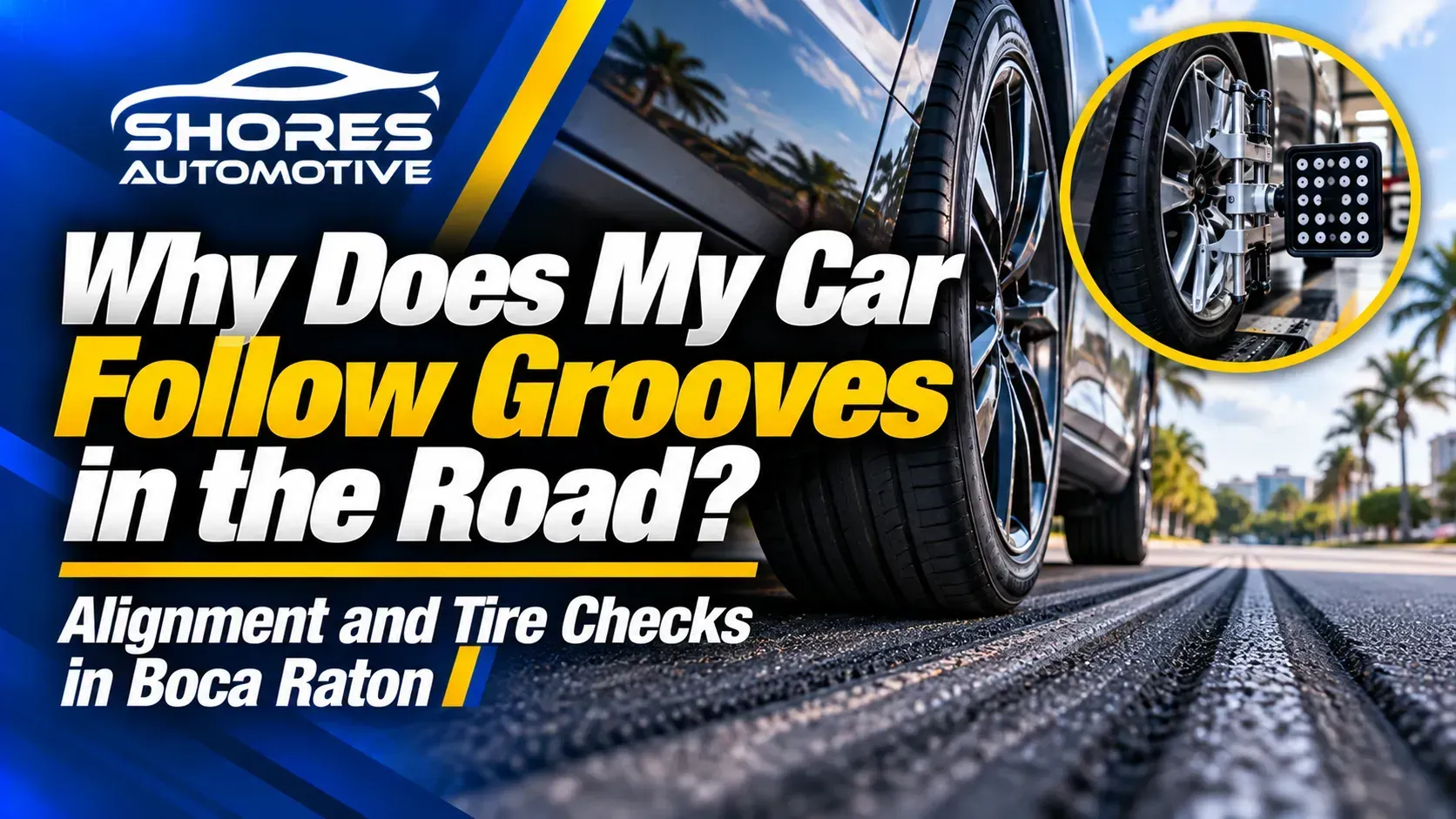
If your car follows grooves in road surfaces, the tires may be reacting to pavement channels or seams, a behavior often called tramlining. Tire design can make it more noticeable, though incorrect pressure, uneven wear, alignment changes, wheel damage, or worn steering parts can add to the movement. Our wheel alignment in Boca Raton, FL, includes tire and suspension checks because alignment is only one possible cause.
Why Cars Follow Grooves in the Road
Road grooves can steer the tires slightly as they roll, even when you hold the steering wheel steady. The effect may feel like a brief tug, a small side-to-side movement, or a need for constant corrections.
A low oil warning can return even when there is no puddle under the vehicle. The engine may be using oil internally, a leak may be collecting on an underbody panel, or the oil level sensor may be reporting an incorrect reading.
The first step is to identify whether the dashboard is showing a low oil level warning or a red oil pressure warning. These messages describe different conditions and require different responses.
Get started today
Mon – Fri | 7:30am – 4:00pm
Sat – Sun | Closed