
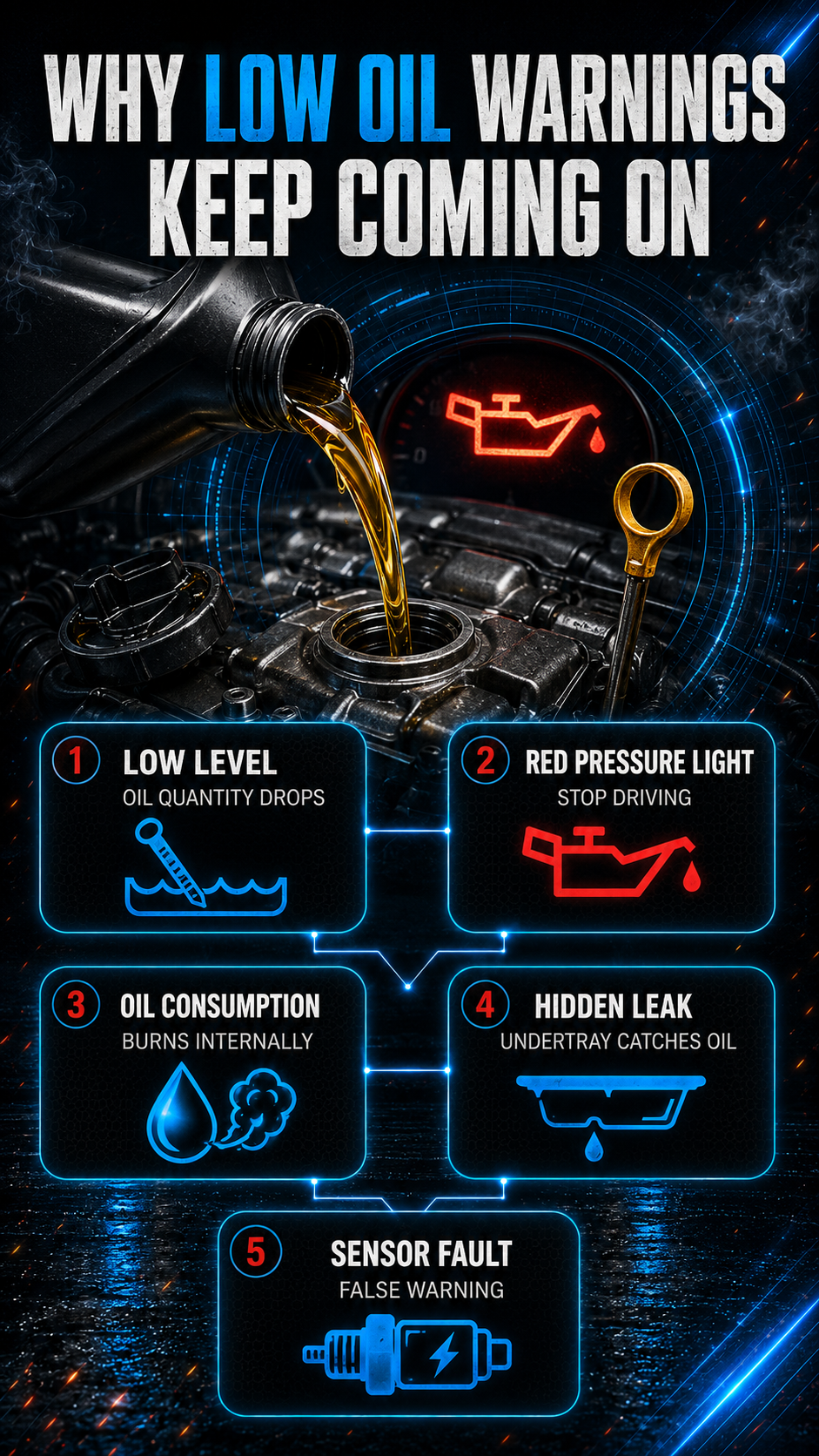
A low oil warning can return even when there is no puddle under the vehicle. The engine may be using oil internally, a leak may be collecting on an underbody panel, or the oil level sensor may be reporting an incorrect reading.
The first step is to identify whether the dashboard is showing a low oil level warning or a red oil pressure warning. These messages describe different conditions and require different responses.
The Evaporator Drain Should Carry Condensation Outside
On a humid South Florida day, the evaporator can produce steady condensation. A small clear puddle under the car is usually normal, especially after Glades Road traffic or cooling a sun-heated cabin.
Dust, leaf material, biological growth, or displaced insulation can restrict the drain opening over time.
A Blocked Drain Can Send Water Into the Footwell
A clogged AC evaporator drain allows condensation to collect until it spills from the HVAC housing. The leak may appear during a drive, after a turn, or shortly after parking.
You might hear water moving behind the dashboard or notice a musty vent smell. Our AC diagnosis and repair service evaluates drain flow, evaporator moisture, and related climate concerns.
How to Tell AC Condensation From Another Leak
Timing, fluid, and weather patterns provide clues but do not prove the source. A car AC water leak often involves clear, odorless water after several minutes of A/C use.
Timing, Smell, and Fluid Feel Provide Clues
Clear water after A/C use supports a drain concern. Coolant from a heater-core leak may feel slick, smell sweet, leave residue, or coincide with a falling coolant level. Color alone is not a reliable test.
If the engine temperature rises, a coolant warning appears, or the liquid smells sweet, stop driving when safe and arrange help. Continuing with a cooling-system leak can lead to overheating.
Rain and Sunroof Drains Can Mimic the Symptom
Water after a downpour, car wash, or overnight rain may enter through a sunroof drain, windshield seal, door membrane, or body seam. Storms near A1A can expose a leak even when the A/C is off.
Check whether moisture begins higher on the kick panel or door opening. Share the weather and A/C timeline with the technician.
What HVAC Diagnostics Should Check
Diagnostics should identify where water begins, where it travels, and whether the drain tube is restricted, disconnected, or damaged.
Confirm the Source Before Clearing the Drain
A technician can run the A/C, inspect drain output, check the HVAC case, and use controlled water testing when needed. Access points and drain routing vary by vehicle.
Avoid pushing wire or high-pressure air into the drain at home. A sharp tool can damage the evaporator or drain fitting, while excessive pressure can force debris deeper or separate a hose inside the dash.
European climate systems may store actuator, sensor, or blower faults that help explain weak airflow. Our A/C work includes BMW, Mercedes-Benz, Porsche, Audi, and other makes. Our Land Rover service provides brand-capable diagnostics for Range Rover, Discovery, Defender, and Evoque climate concerns.
Inspect Wet Carpet and Nearby Components
The carpet can feel nearly dry while its padding remains saturated. Inspection should cover the underlay, nearby wiring, connectors, and trim.
The Florida Department of Health's mold and moisture guidance emphasizes moisture control and prompt drying of wet materials. In a vehicle, removing trapped water and restoring airflow can help limit musty odor, staining, and damage to materials or electrical connections.
What to Do When the Passenger Floor Is Wet
Blot standing water and move loose floor mats to a dry area. Note whether the leak followed A/C use, rain, a car wash, or a coolant-level change. Photos can help with an intermittent leak.
Limit A/C use if more water enters the cabin. Do not pour chemicals into the drain or remove dashboard trim. Arrange HVAC drain repair in Boca Raton when the leak repeats, padding stays wet, or an odor develops.
If you find wet passenger-side carpet after an I-95 drive, keep electronics off the floor. Dry the area promptly, especially when water is near wiring or control modules.
Takeaways
Water under a vehicle after A/C use is often normal, but water inside the passenger footwell is not. A restricted or displaced evaporator drain is one possibility; rain entry, sunroof drains, weather seals, and coolant leaks must also be considered.
When water on the passenger floor after AC use keeps returning, diagnosis should confirm the source before the drain is cleared. The carpet and padding also need attention because surface drying may leave moisture trapped below.
Frequently Asked Questions
Is clear water on the passenger floor usually from the AC?
Clear water that appears after A/C use often comes from evaporator condensation, especially when the exterior drain has little or no flow. Rain entry and other drainage problems can also produce clear water, so the timing and leak path still need to be checked.
Can I keep running the AC with a clogged drain?
Not if running it adds water to the cabin. Continued overflow can soak carpet padding and expose nearby wiring or connectors to moisture.
Why does the carpet still feel wet after the drain is cleared?
The carpet may remain wet because its thick padding can hold much more water than the surface shows. The underlay may need extraction, airflow, or partial lifting to dry fully after the source is repaired.
Could passenger-floor water be coolant?
Yes, a heater-core or cooling-system leak can place coolant near the passenger floor. A sweet smell, slick feel, residue, low coolant level, or rising engine temperature calls for prompt cooling-system inspection.
How can I help prevent another HVAC drain blockage?
You can help by replacing the cabin air filter at the vehicle's recommended interval and keeping leaves or debris away from the windshield cowl. Regular A/C operation and service can reveal weak drainage before water reaches the carpet, but the drain should not be probed without the correct procedure.
Schedule HVAC Drain Diagnosis in Boca Raton
If the passenger footwell gets wet after you run the A/C, contact Shores Automotive in Boca Raton, FL, for a focused source check. Tell us whether the leak follows humid driving, heavy rain, or both, and whether you notice odor, weak airflow, or a change in coolant level.
Call
(561) 391-0260 to schedule service or visit us at
2544 NW 2nd Ave, Boca Raton, FL 33431. Our team can inspect the drain, HVAC case, interior moisture, and other likely entry points before recommending the appropriate repair.
Finding water on the passenger floor after AC operation often points to condensation that is not leaving the HVAC case as designed. A blocked or displaced evaporator drain can send clear water into the footwell. At Shores Automotive, our climate and cooling system service checks the drain path and rules out other leaks.
Boca Raton humidity makes the air conditioner pull plenty of moisture from cabin air, which is normal. Water reaching the carpet is not. Confirm the source before the interior stays damp.
Why AC Operation Can Leave Water Inside the Cabin
Your air conditioner creates water as humid air passes across the cold evaporator. The HVAC case should collect that condensation and direct it outside through a drain tube.
A low oil warning can return even when there is no puddle under the vehicle. The engine may be using oil internally, a leak may be collecting on an underbody panel, or the oil level sensor may be reporting an incorrect reading.
The first step is to identify whether the dashboard is showing a low oil level warning or a red oil pressure warning. These messages describe different conditions and require different responses.
Get started today
Mon – Fri | 7:30am – 4:00pm
Sat – Sun | Closed