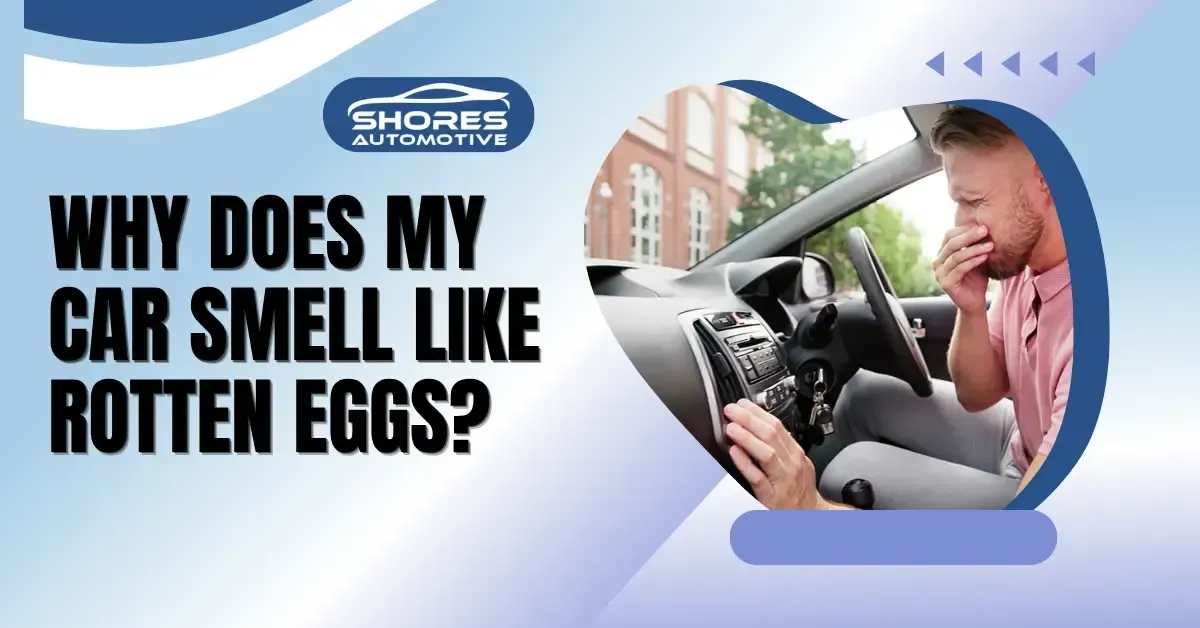
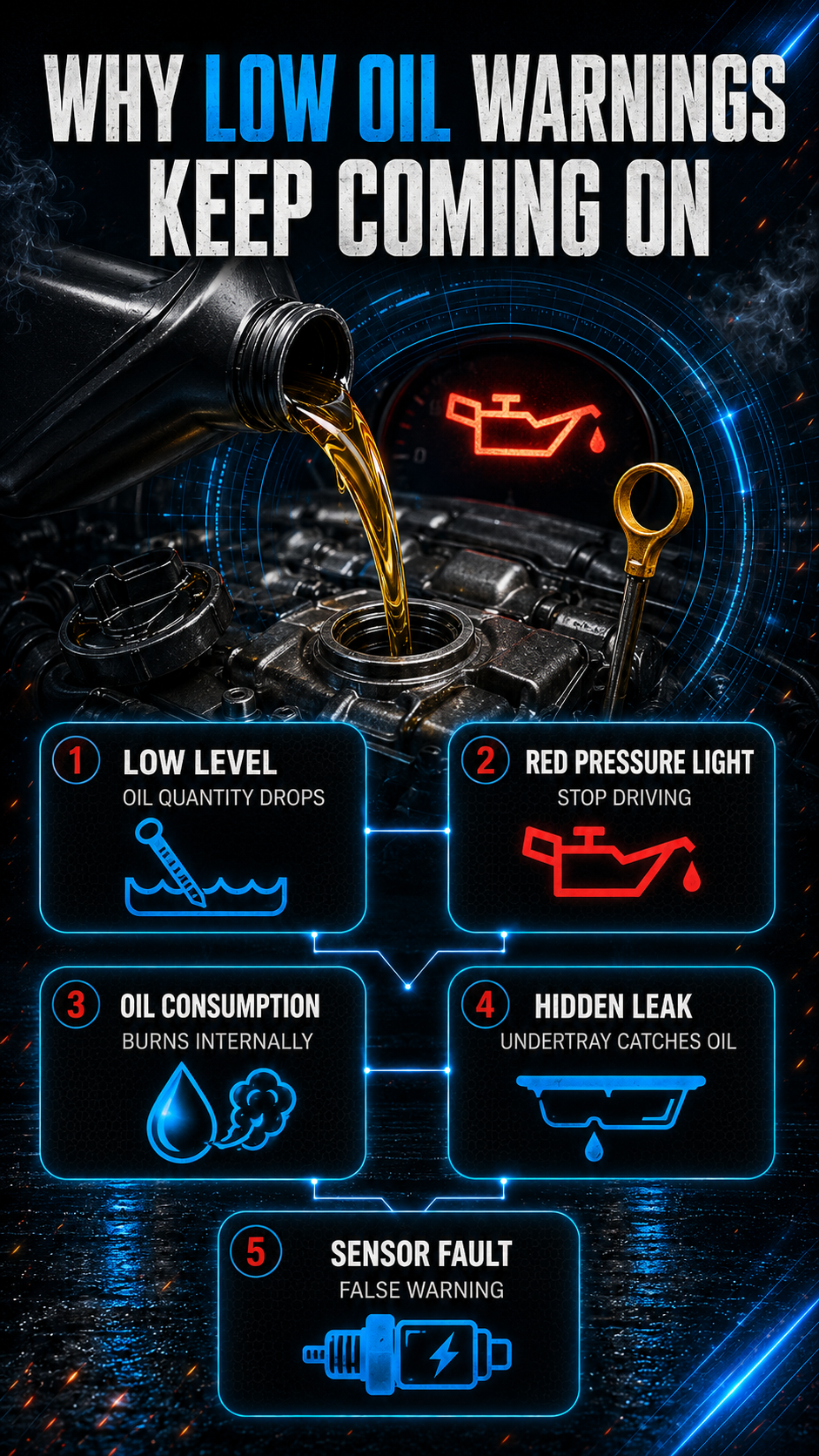
A low oil warning can return even when there is no puddle under the vehicle. The engine may be using oil internally, a leak may be collecting on an underbody panel, or the oil level sensor may be reporting an incorrect reading.
The first step is to identify whether the dashboard is showing a low oil level warning or a red oil pressure warning. These messages describe different conditions and require different responses.
Why a Rotten Egg Smell Happens
A rotten egg smell can develop when fuel is not burning cleanly or the exhaust system is not processing gases correctly. The odor may also come from a catalytic converter that has been damaged by another problem.
The Converter May Not Be Processing Exhaust Correctly
If the converter is no longer working as designed, sulfur compounds in the exhaust can create that rotten egg odor. You may notice it more after acceleration, highway driving, or a hot shutdown. In some cases, the car may also feel restricted, almost like it cannot breathe normally.
The Engine May Be Running Too Rich
A rich fuel mixture sends too much fuel through the engine. That can strain the converter and create odor, poor fuel economy, rough running, or black soot at the tailpipe. Fuel trim data, oxygen sensor readings, and live engine information help separate a converter problem from a fueling issue.
If fuel delivery is part of the concern, fuel system repair and cleaning may be part of the next diagnostic path.
Misfires Can Overheat the Converter
A misfire happens when one or more cylinders do not burn fuel properly. Unburned fuel can then enter the exhaust and create excessive heat inside the catalytic converter. That heat can damage the internal material, trigger a check engine light, and lead to power loss if the converter becomes restricted.
Boca Driving Conditions That Can Make Exhaust Problems Show Up Faster
Certain Boca Raton driving patterns can make an existing exhaust or emissions problem become noticeable sooner. Short trips, heavy A/C use, humid weather, and quick highway runs on I-95 can all change how and when symptoms appear.
Heat and Stop-and-Go Traffic
South Florida heat raises the stress level on the entire powertrain. Stop-and-go traffic along Yamato Road, Federal Highway, and Palmetto Park Road can keep exhaust temperatures high. If the engine is already running rich or misfiring, those conditions can make the odor stronger.
Coastal Moisture and Corrosion
Cars that spend time near A1A, waterfront homes, or coastal parking areas deal with moisture and salt air. That can affect exhaust hardware, oxygen sensor connections, clamps, and pipe sections. For related concerns, Shores Automotive provides exhaust system repair in Boca Raton for leaks, corrosion, converter concerns, and sensor-related exhaust issues.
Seasonal Driving and Stored Vehicles
Snowbird season can bring vehicles back into regular use after weeks or months of sitting. A car that has been stored, driven south, then put into daily Boca use may show fuel, battery, tire, or exhaust concerns quickly. A fresh odor after storage deserves attention before the vehicle becomes unreliable.
Warning Signs That Need More Than a Quick Smell Test
If your car smells like rotten eggs once, pay attention to when it happens. If it repeats, grows stronger, or comes with drivability changes, testing should happen soon.
Watch for loss of power, rough idle, hesitation, poor fuel economy, rattling from underneath the vehicle, a hot smell near the floor, or a check engine light. A flashing check engine light needs faster attention because active misfires can damage the catalytic converter.
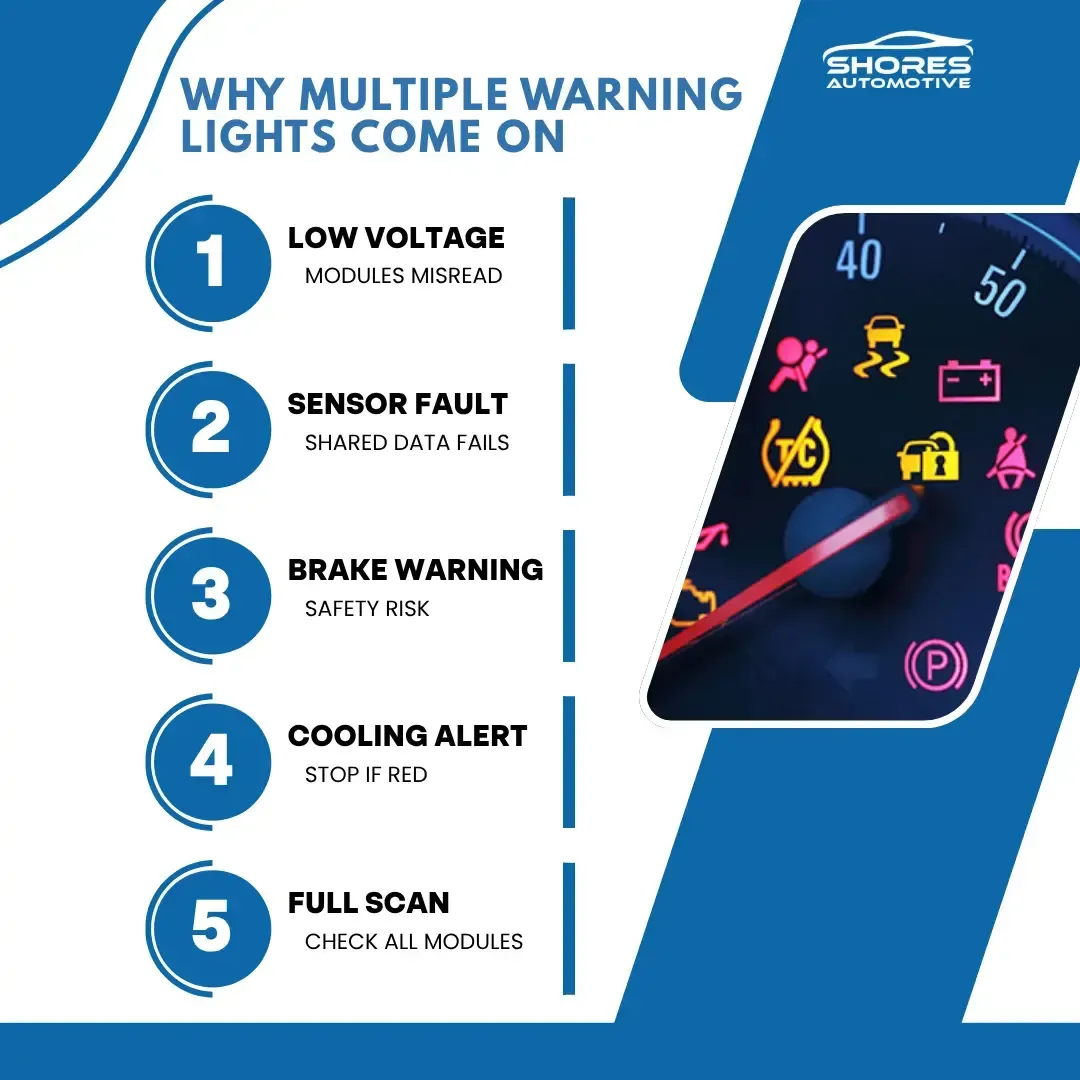
A rotten egg smell from car exhaust paired with warning lights often calls for check engine light diagnostics, not a basic code read. The code gives direction. The testing confirms what is actually happening.
For a broader look at how warning signs fit into ownership, see the Shores Automotive guide to general auto repair basics. It explains why smells, lights, noises, and performance changes should be checked before they spread.
How Shores Automotive Checks Rotten Egg Odors on European Vehicles
Shores Automotive approaches a rotten egg odor by first determining which system is causing the problem. On European and exotic vehicles, the goal is to confirm the source before recommending a catalytic converter or other repair.
Scan Data and Fuel Trim Review
Shores Automotive uses diagnostic data to review fault codes, fuel trims, oxygen sensor behavior, misfire counts, and freeze-frame details. That helps identify whether the converter is failing, the engine is running too rich, or a sensor is reporting bad information.
Exhaust Restriction and Leak Checks
An exhaust issue can involve leaks, restrictions, damaged hangers, corrosion, or a converter that is overheating or breaking down internally. The car may smell, lose power, sound different, or feel sluggish under load. Testing helps avoid guessing at parts.
Fuel and Ignition System Testing
A failing coil, worn spark plug, injector issue, air metering fault, or fuel pressure concern can damage the converter if it is left alone. When the symptom points deeper into the engine, Shores Automotive can find out what is actually causing your engine trouble before the repair plan is approved.
Takeaways
A rotten egg odor can point toward the catalytic converter, but it can also come from a rich fuel mixture, misfires, oxygen sensor concerns, or exhaust leaks. The safest approach is to test the system before replacing parts.
For Boca Raton drivers, heat, traffic, coastal moisture, and seasonal use can make exhaust problems show up sooner. If the smell repeats or appears with power loss, rough running, or a check engine light, schedule diagnosis before the converter or related components face more damage.
FAQs About Rotten Egg Smells and Catalytic Converters
Is it safe to drive if my car smells like rotten eggs?
A light smell once may not mean immediate danger, but repeated odor should be checked. If the smell comes with power loss, rough running, a flashing check engine light, or heat under the vehicle, avoid driving farther than needed.
Does a rotten egg smell always mean the catalytic converter is bad?
No, a rotten egg smell does not always mean the catalytic converter is bad. The converter may be affected, but the cause can come from a rich fuel mixture, misfires, oxygen sensor readings, fuel system faults, or exhaust leaks. Replacing the converter without fixing the cause can lead to repeat failure.
Why does the smell get worse after acceleration?
Acceleration increases fuel demand and exhaust flow, which can make the odor stronger. If the vehicle is running rich or misfiring, more unburned fuel may enter the exhaust after a harder drive.
Can a check engine light be related to a rotten egg smell?
Yes, a check engine light can appear when the vehicle detects converter efficiency problems, oxygen sensor faults, misfires, fuel trim issues, or emissions-related concerns. The light should be tested with live data, not judged by the code alone.
Do European cars need a different diagnostic process?
Yes, European cars may need a different diagnostic process, especially when the vehicle has multiple modules, sensitive fuel control, turbocharged performance, or complex emissions monitoring. A BMW, Mercedes-Benz, Porsche, Audi, or Land Rover often needs brand-aware testing before parts are replaced.
Get Rotten Egg Smell Diagnosis Help from Shores Automotive
A sulfur odor should be handled while the symptom is still easy to verify. Shores Automotive can inspect the exhaust path, review engine data, check fuel and ignition behavior, and confirm whether you need catalytic converter diagnosis in Boca Raton or a related repair path.
Call Shores Automotive at
(561) 391-0260 or visit us at
2544 NW 2nd Ave, Boca Raton, FL 33431. Loaner cars, valet pickup, early drop-off, and after-hours pickup may be available when scheduling allows.
A rotten egg smell from your car can come from a catalytic converter problem, a rich fuel mixture, a misfire, an oxygen sensor fault, or another exhaust-related issue. You may notice the odor after a drive, when parking near Glades Road, or when stepping out of the vehicle. That is where catalytic converter diagnosis in Boca Raton becomes important. Shores Automotive evaluates the exhaust system, engine data, and vehicle behavior before recommending repairs.
Catalytic Converter Diagnosis in Boca Raton Starts With the Cause
The first step in catalytic converter diagnosis is finding out why the exhaust system is producing the sulfur smell. A catalytic converter helps clean exhaust gases before they leave the tailpipe. When the system is overwhelmed, restricted, overheated, or receiving the wrong fuel mixture, a sulfur-like odor can appear.
Good catalytic converter diagnosis in Boca Raton should not begin with replacing the converter. A new converter can fail again if the root cause is still active. On BMW, Mercedes-Benz, Porsche, Audi, Land Rover, Jaguar, Maserati, and other European vehicles, the cause often sits upstream. It may involve how the engine is fueling, firing, or measuring exhaust.
A low oil warning can return even when there is no puddle under the vehicle. The engine may be using oil internally, a leak may be collecting on an underbody panel, or the oil level sensor may be reporting an incorrect reading.
The first step is to identify whether the dashboard is showing a low oil level warning or a red oil pressure warning. These messages describe different conditions and require different responses.
Get started today
Mon – Fri | 7:30am – 4:00pm
Sat – Sun | Closed